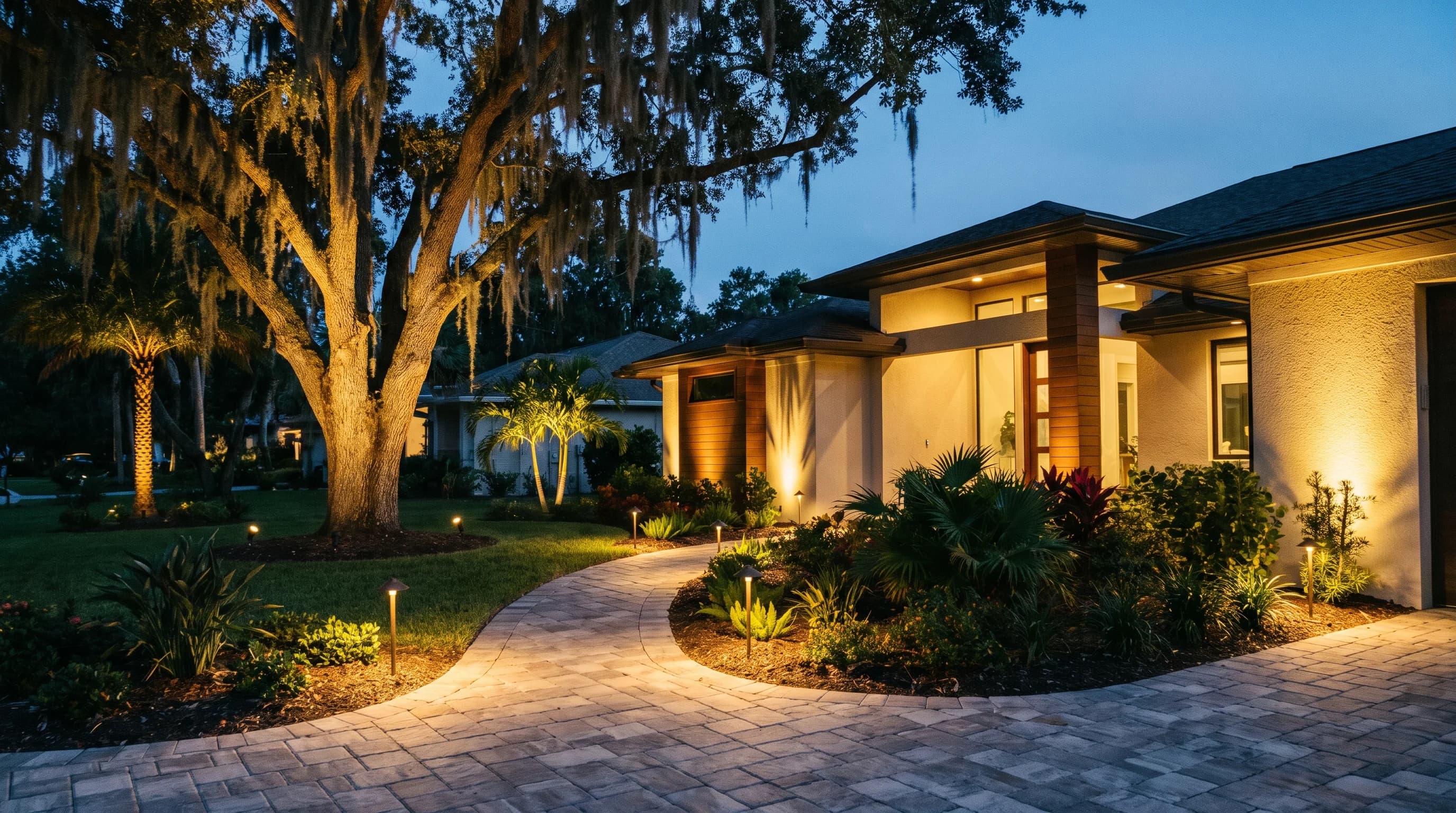
A single landscape lighting install can run a few thousand dollars, and a large estate system can pass ten thousand. Those are illustrative numbers, not a quote - but the shape holds: this is high-ticket, high-margin work. As an example, say your average job is $4,000 and you close one good quote out of three. Every three real landscape lighting leads is worth roughly $4,000 in booked work, and one lost quote is a $4,000 hole.
That changes the whole marketing question. You do not need a flood of cheap leads. You need a handful of good ones a month and a way to stop the good ones from leaking. This is the honest channel map for where landscape lighting leads actually come from, in the order most established lighting pros would rank them, plus the one leak that quietly kills the highest-value jobs.
Where landscape lighting leads actually come from
Strip out the hype and there are really four sources that matter. Most of your calendar comes from the first two. Paid channels fill gaps.
- Referrals and repeat work. A well-lit yard is a billboard every night. Neighbors notice, and past clients add zones. This is the cheapest and highest-closing source you have.
- Partnerships with other outdoor contractors. Pool builders, deck builders, hardscapers, and landscape designers all finish projects that beg for lighting. Their customer just spent big on the yard and wants to enjoy it after dark.
- Being found on Google. When a homeowner searches "landscape lighting near me," your Business Profile and your website decide whether you are on the short list.
- Paid search and Local Services Ads. For people actively shopping right now, paid placement puts you in front of them faster than SEO alone.
Your best lead source is a customer someone else already sold
Here is the angle most lighting marketing skips. You do not have to create demand from scratch. Other outdoor contractors already have your customers - they just are not selling lighting.
Every hardscape patio, every new pool, every outdoor kitchen is a lighting job waiting to happen. The homeowner has already decided to invest in the yard and has the budget open. A growth system built for outdoor living and hardscape companies is the same soil your leads grow in, which is exactly why partnership referrals convert so well: the trust and the budget are already there.
Two ways to turn that into steady leads:
- Set up reciprocal referrals. Take the pool, deck, and hardscape builders in your area to coffee. Offer to light their finished projects at a clean price and to send them work when a lighting client needs hardscaping. A handful of active partners can feed a small crew.
- Bundle at the point of sale. If you also do landscaping or hardscaping, quote lighting on the same estimate instead of waiting for the customer to ask. It is far easier to add a lighting zone to a project someone is already buying than to sell it as a standalone call next year.
Make your finished work do the selling
Landscape lighting is a visual sale. Nobody buys it from a bulleted feature list - they buy it from a photo of a house that looks twice as expensive at night. So your marketing job is mostly to capture and show that transformation.
Do three things with every install:
- Shoot it after dark. A quick before-and-after - flat daytime yard, then the same yard glowing at night - is the single most persuasive asset you own. Get the homeowner's permission and build a real gallery.
- Feed your Google Business Profile. Photos are not decoration, they are a ranking and conversion input. Google's own guidance on business-specific photos for your Business Profile spells out the categories and quality it wants, and profiles that look complete win more clicks.
- Show the gallery on every estimate. When you hand a $6,000 quote to a homeowner, scrolling through ten real night shots of local yards does more to close it than any discount.
Get found when someone searches at night
When a homeowner finally decides they want their yard lit, they search. You want to be the obvious local answer.
Start with the free asset. A complete, active Google Business Profile is the backbone of local visibility, and Google is unusually clear about what moves the needle. Its tips to improve your local ranking on Google come down to relevance, distance, and prominence: a fully filled-out profile, the right primary category, steady reviews, and fresh photos. None of that costs money - it costs attention.
For faster, shoppable demand, paid placement helps. Google's Local Services Ads put verified service businesses at the top of the results and charge per lead rather than per click, which fits a high-ticket trade where one booked job pays for many leads. Standard Google Search ads work too when you target buying-intent terms and let people call you in one tap from their phone.
The point is sequence, not volume. Own your free local presence first, then buy speed on top of it. Paid ads that send leads to a thin profile and a slow phone just waste money faster.
The leak that kills your best landscape lighting leads
Here is the part almost no one fixes. The most expensive lost lead is not the one you never got - it is the good one you got and let go cold.
High-ticket lighting rarely closes on the first touch. The homeowner gets a $5,000 quote, says "let me think about it," and means it. Then nobody follows up. Most competitors quote once and move on, so the job goes to whoever stays in the conversation. Two habits win most of these:
First, answer fast. When someone fills out your form or calls, the company that responds within minutes usually wins the estimate, because attention fades quickly and the second call feels like a chore. We wrote a whole piece on why speed to lead decides who wins the job, and it applies double to jobs this size.
Second, follow up on every quote on a schedule, not a whim. A simple sequence - a same-day thank-you with the night gallery, a check-in a few days later, a final nudge the next week - recovers jobs that would otherwise vanish. Doing that by memory across a busy install season is where owners lose money. A growth system that captures every lead and follows up automatically is what turns a pile of quotes into booked lighting jobs instead of a graveyard of maybes.
The Central Florida angle
In cold markets landscape lighting is seasonal, tucked between mowing and snow. Central Florida is different. Outdoor spaces get used nearly year round, evenings on the patio are the whole point of the yard, and the growing season never really stops.
That means a longer, steadier selling window and a stronger everyday pitch: your clients actually live outside after dark. It also means your competitors are marketing all year, so a light, always-on presence - an active profile, fresh night photos, quick follow-up - beats cranking up cold every fall. If you serve the greater Orlando area, "we light the yard you already spent good money building" lands almost every time.
So where should you start?
Pick the branch that matches where you are right now.
- If your phone is quiet, fix visibility first. Complete and photograph your Google Business Profile, build a real night-photo gallery, and turn on Local Services Ads for buying-intent searches. Get found before you spend on anything fancier.
- If leads come in but too few close, your leak is follow-up, not traffic. Put a fast-response and quote-follow-up system in place before you buy a single new lead. A complete growth system for outdoor living contractors is built exactly for that.
- If you have steady work but want the high-margin add-on, go build partnerships. Line up three pool, deck, or hardscape builders this month and offer to light their finished projects.
Landscape lighting leads are not really a volume problem - they are a proof-and-follow-up problem. Show the transformation, be easy to find, and never let a good quote go cold, and a few leads a month is all a profitable lighting business needs.