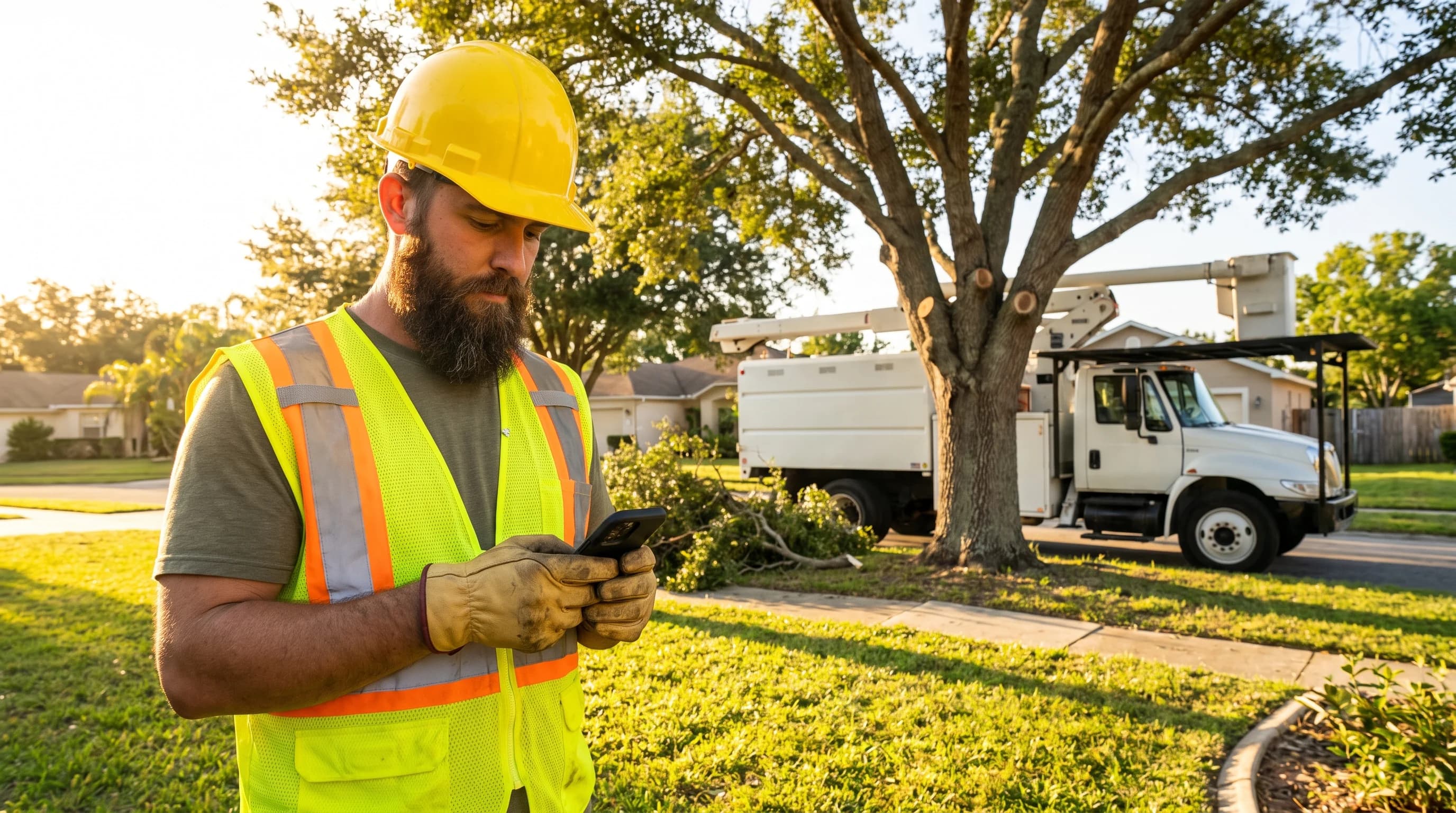
A booked tree removal is worth $1,000 to $8,000. A hardscape project can run $5,000 to $50,000 or more. Now look at how long it takes the average company to call a new lead back, and you can see the money leaking in real time.
Independent research on online sales leads, published in the Harvard Business Review, found the average firm took more than 42 hours to respond to a web lead, and 23 percent never responded at all. Forty-two hours. For a home service buyer with a dead tree leaning over the garage, forty-two hours is three other companies already booked.
That gap is the whole game. Speed to lead for home services is not a nice-to-have polish on your marketing. It is the single step that decides whether the lead you already paid to generate turns into a job or into someone else's job.
Why the first call back usually wins
Put yourself in the homeowner's shoes. A branch came down in the last storm, or the sprinkler zone stopped working, and they want it handled. They do not call one company and wait. They open Google, tap three or four listings, and either call or fill out forms on all of them in about ninety seconds.
From that moment, a clock is running that they control. Whoever calls back first gets to talk while the problem is still fresh and the homeowner is still anxious. That company answers the questions, sets the expectations, and often books the appointment on the spot. By the time company number four calls back, the homeowner has already met someone, liked them, and scheduled the work.
The same HBR research found that companies that managed to make contact within an hour were about seven times more likely to have a meaningful qualifying conversation than those that waited even sixty minutes longer. The lead did not get worse. The window closed.
This is why more leads will not fix a slow shop. If you buy twice the traffic but still take two hours to respond, you are just paying to lose twice as many races.
Speed to lead is a revenue number, not a service metric
Owners tend to file "response time" under customer service, somewhere near "be polite on the phone." That undersells it badly. Response time is a revenue lever you can pull without spending a cent more on advertising.
Run the math on your own business. Say you get 40 leads a month from your ads and website, and you close 20 percent of them because half go cold before you call back. If tightening your response time lifts your close rate to 30 percent, you did not add a single lead, but you booked four more jobs. At home service ticket values, those four jobs can be worth more than your entire monthly ad budget.
Even Google rewards it directly. In its own documentation for Local Services Ads, Google notes that responding to leads quickly can improve your ad ranking, and that regularly failing to answer calls or messages can push your listing down. Fast follow-up does not just win the lead in front of you. It helps you show up for the next one.
Where home service leads actually leak
Slow response is rarely laziness. It is structural. Your best salespeople are your owner and your lead techs, and they are on job sites, up in a canopy, or driving between estimates. The lead comes in exactly when nobody can answer it. That is the trap.
Here is where the leaks usually hide:
- Missed calls that never get a text back. The call goes to voicemail, the homeowner hangs up and calls the next company, and no one ever knows the lead existed.
- Form fills that sit in an inbox. A website quote request lands in an email nobody checks until the end of the day, by which point it is stone cold.
- After-hours and weekend leads. Storms do not wait for business hours, and neither do the homeowners searching at 8pm on a Sunday.
- The follow-up that stops at one try. Someone leaves one voicemail, hears nothing back, and gives up. Most booked jobs take more than one touch to reach a busy homeowner.
None of these are a people problem you can yell your way out of. They are a systems problem, and systems are fixable.
How to make fast follow-up automatic
The fix is not "hire someone to stare at the phone." It is to make the first response happen on its own, so it is instant every time regardless of who is free. A complete growth system for home service companies is built around exactly this: no lead sits untouched, whether it comes in at noon or midnight.
Three pieces do most of the work:
- Instant missed-call text back. When a call goes unanswered, an automatic text fires within seconds: "Sorry we missed you, this is [Company]. What can we help with?" That single message keeps the homeowner in a conversation with you instead of dialing your competitor. It is the highest-return automation most owners have never turned on.
- Auto-reply on every form. The moment someone submits a quote request, they get a text or email that confirms you got it and tells them exactly when a human will follow up. Setting that expectation buys you time and stops them from shopping onward.
- A follow-up sequence that does not quit at one try. A short, automated series of texts and reminders over the next few days catches the people who meant to reply and got distracted. This is where the jobs that "went cold" quietly come back to life.
The point is not to replace the human conversation. It is to hold the lead's attention until your crew can have it. The automation answers in seconds; your estimator closes when they climb down.
What speed to lead will not fix
Fast response is powerful, but it is not magic, and it is worth being honest about the limits.
It will not save a lead you have no way of capturing. If missed calls and form fills are not tracked in one place, you cannot respond fast to leads you never see, which is why lead capture and call tracking are built into our transparent packages rather than sold as an afterthought. You have to catch the lead before you can race to it.
It also will not close a bad fit. A five-second text back to someone outside your service area or your price range just gets you to a "no" faster, which is fine. Speed to lead makes your real opportunities convert. It does not turn tire-kickers into customers.
And it will not replace doing good work. Winning the first call gets you the appointment. Showing up, being straight about the price, and finishing the job is what earns the review and the referral that feed the next month.
Do this before Friday
You do not need a new CRM or a big project to start winning the race. You need three concrete moves this week:
- Measure your real response time. Have someone submit your form and call your main line during a busy weekday afternoon. Write down how many minutes pass before a human responds. You cannot fix what you have not measured.
- Turn on missed-call text back today. Of everything here, this recovers the most money for the least effort. Every unanswered call should trigger an automatic text within seconds, starting now.
- Write one follow-up sequence and set it to fire on its own. Three short messages over four days, sent automatically to every new lead who has not booked yet. Draft it once, and it works every day after without you touching it.
Do those three things and your close rate moves this month, on the leads you are already paying for. When you are ready to wire the whole thing together so it runs without you thinking about it, that is exactly what our growth system for home service companies is built to do. The company that answers first is the company that books the job. Make sure that company is yours.