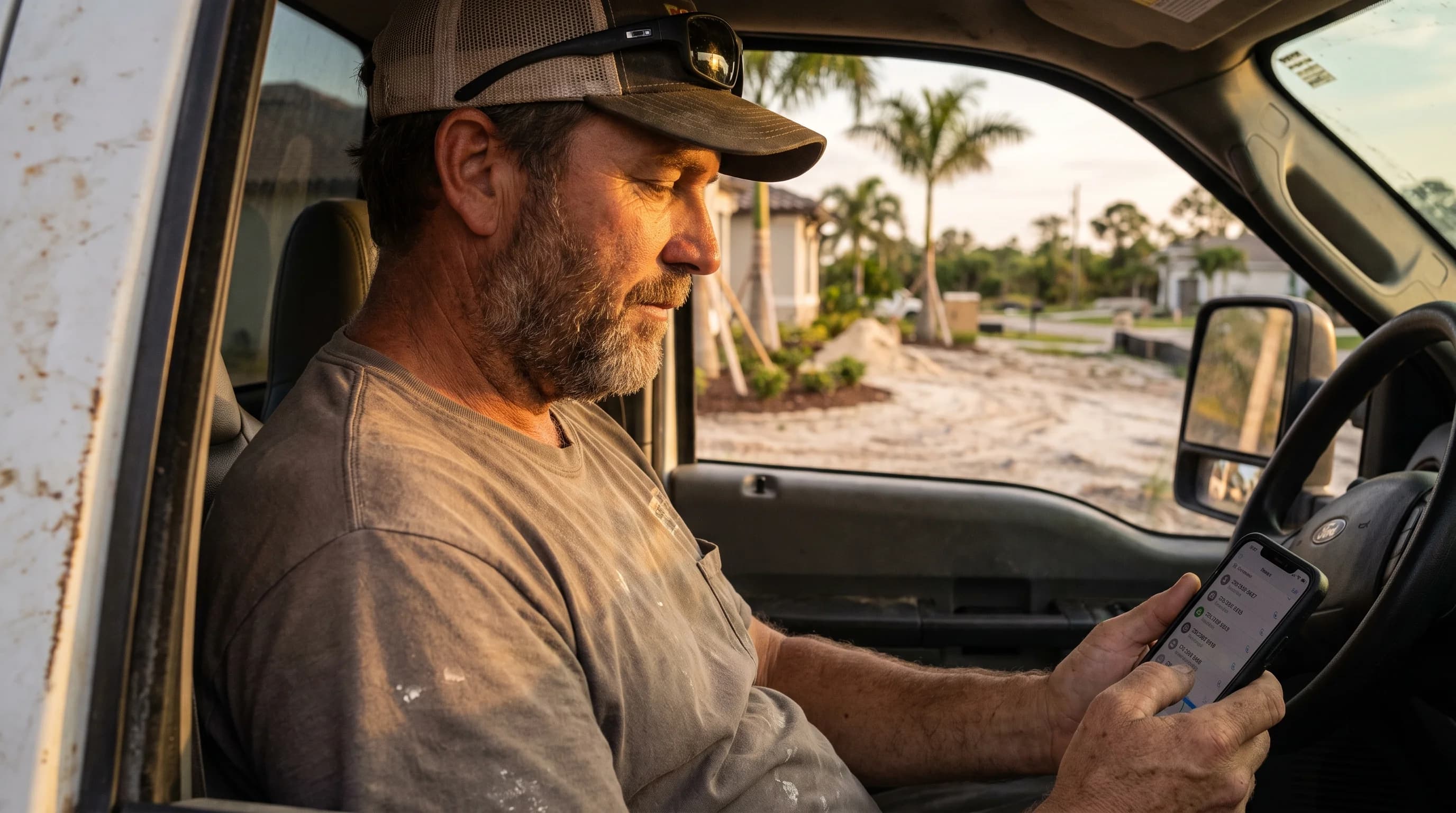
More leads will not fix a marketing budget you cannot see. Plenty of contractors add a second ad campaign or a new lead vendor when growth stalls, and six months later they are spending more without knowing whether any of it books work. The problem was never the number of leads. It was that the phone rang all day and nobody could say which marketing made it ring.
That blind spot is expensive. When a single tree removal runs $1,000 to $8,000 and a hardscape project can land anywhere from $5,000 to $50,000 or more, guessing wrong about which channel produces those jobs is not a rounding error. It is the difference between doubling down on what works and quietly funding what does not.
Call tracking for contractors closes that blind spot. Done right, it tells you the one number that actually matters, and this post walks through how to set it up without turning your business into a data project.
The number most contractors never track
Ask a contractor how their marketing is doing and most will answer with the wrong metric: impressions, clicks, "the phone's been busy," or total leads. None of those pay a fuel bill.
The number that does is cost per booked job by channel. Not cost per click. Not cost per lead. What did it cost, in this specific channel, to produce one paying, scheduled job?
Here is why the distinction is everything. Say two channels each send you ten calls this month (illustrative numbers). Channel A is packed with tire-kickers and wrong numbers and books one job. Channel B books six. On a lead-count report they look identical. On a cost-per-booked-job report, one is a workhorse you should feed and the other is a drain you should cut. Without call tracking, you cannot tell them apart, so you tend to keep paying for both.
That single view - what did a booked job cost me here versus there - is also what makes a marketing budget make sense in the first place. It is the same math behind our transparent pricing and packages: you can only judge what a growth investment is worth once you know what a booked job actually costs you today.
What call tracking for contractors actually is
Call tracking assigns a unique, trackable phone number to each marketing source. When someone dials that number, the system forwards the call straight through to your normal business line with no delay the caller notices, and quietly logs where the call came from.
The building blocks are simple:
- Source numbers. A different tracking number for each channel you want to measure - Google Ads, Local Services Ads, your Business Profile, a specific mailer, a truck wrap, a sponsor sign.
- Dynamic number insertion (DNI). A small script on your website swaps the displayed number based on how the visitor arrived, so a click from a Google ad and a click from an organic search each get their own trackable number without you building separate sites.
- Call reporting and recording. A dashboard that shows calls per source, plus optional recordings and durations so you can judge call quality, not just volume.
Google's own tools cover the paid-search slice of this natively. Its guide to call reporting explains how Google forwarding numbers track calls that come from your ads, and its documentation on phone call conversion tracking shows how to count a call as a conversion once it passes a minimum length you set. If ads are your only paid channel, that built-in reporting is a strong and free place to begin.
How to set it up without a computer science degree
You do not need an IT person for this. A working setup for a small contracting business usually looks like this:
- Pick the channels you actually spend on or want to prove out. Do not number every business card in the truck. Start with the two or three sources you pay real money for and the one or two free sources you want to measure, like your profile and referrals.
- Turn on Google Ads call reporting first if you run ads. It is included, and per Google's call reporting setup, it starts attributing calls to campaigns and keywords right away.
- Add a third-party tracking provider once you run more than one channel. The common platforms give you source numbers and a DNI snippet that drops into your site header in a few minutes. That is what lets you compare ads against Local Services Ads against your profile on one screen.
- Set a minimum call length that counts as a real lead. A twelve-second wrong number is not a lead. Counting only calls past a threshold you choose keeps the report honest.
- Keep your public number consistent. Use DNI so search engines and directories still see your one true business number, and reserve fixed tracking numbers for campaigns like mailers and signage. Consistent name, address, and phone across your listings protects your local visibility.
Wire tracked calls to booked jobs, not just calls
This is the step almost every guide skips, and it is the whole point. Knowing a channel produced twenty calls means nothing until you know how many became scheduled jobs and what those jobs were worth.
Two habits close the loop:
- Tag the outcome of every tracked call. In your call dashboard or your CRM, mark each call as booked, quoted, junk, or existing customer. Ten minutes at the end of the day, done by whoever answers the phone, turns raw call counts into a real pipeline.
- Attach revenue where you can. Even a rough job value against the source tells you which channel brings the $6,000 removals and which brings the $150 trim-and-runs.
Recordings make this reliable. When you can listen to how calls are handled, you learn two things at once: which channels send serious buyers, and whether the person answering is actually booking them. Sometimes the marketing is fine and the leak is the greeting. Speed matters here too, and once you are tracking calls you will see missed and abandoned ones in black and white - which is exactly the gap a system like missed-call text back for contractors is built to plug.
The mistakes that make call tracking lie to you
Call tracking only helps if the data is clean. The common ways contractors fool themselves:
- Counting calls instead of jobs. A busy phone feels like success. Booked jobs by source is the only score that pays.
- Ignoring call quality. One channel's ten calls are booked removals; another's ten are price-shoppers who never sign. Volume hides this. Recordings and outcome tags expose it.
- Not tagging outcomes, so the report rots. An untended dashboard becomes noise within a month. The daily tag habit is what keeps it worth reading.
- Forgetting the offline channels. Yard signs, truck wraps, and door hangers can get their own numbers too. If you cannot measure your signage, you are guessing about it.
- Judging a channel on one slow week. Give a source enough calls to mean something before you kill it. A handful of calls is a hunch, not a verdict.
If you run Local Services Ads, remember that platform reports calls and leads in its own dashboard, and you can dispute leads that were not genuine - a discipline we cover in our guide to Google Local Services Ads for tree service. Reconciling those platform numbers with your own call tracking keeps any single vendor from grading its own homework.
Reading the report: feed, fix, or cut
Once outcomes are tagged, every channel sorts into one of three actions, and the monthly review takes fifteen minutes:
- Feed the channels with the lowest cost per booked job. That is where more budget turns into more work.
- Fix the channels that send good calls you are not closing. The marketing is working; the answer or the follow-up is not.
- Cut the channels that stay expensive per booked job after a fair trial. That freed-up money goes to the workhorses.
Wiring this loop - track, tag, review, reallocate - so it runs every month without you babysitting it is exactly the kind of measurement layer built into our growth system for outdoor service companies. The marketing fills the pipeline; the tracking makes sure you are pouring money into the channels that actually book jobs.
The one number to walk away with
If you take a single thing from this, make it cost per booked job by channel, and commit to knowing it by name for every source you spend on.
Here is the fastest way to get there. Turn on Google Ads call reporting today if you run ads. Add source numbers for your other paid channels this month. Then start the ten-minute daily habit of tagging every tracked call as booked, quoted, or junk. Within one full month you will have a report that tells you, in dollars, which marketing to feed and which to cut - and that clarity is worth far more than the next lead vendor you were about to hire.
You do not have a lead problem. You have a visibility problem. Call tracking is how you fix it.