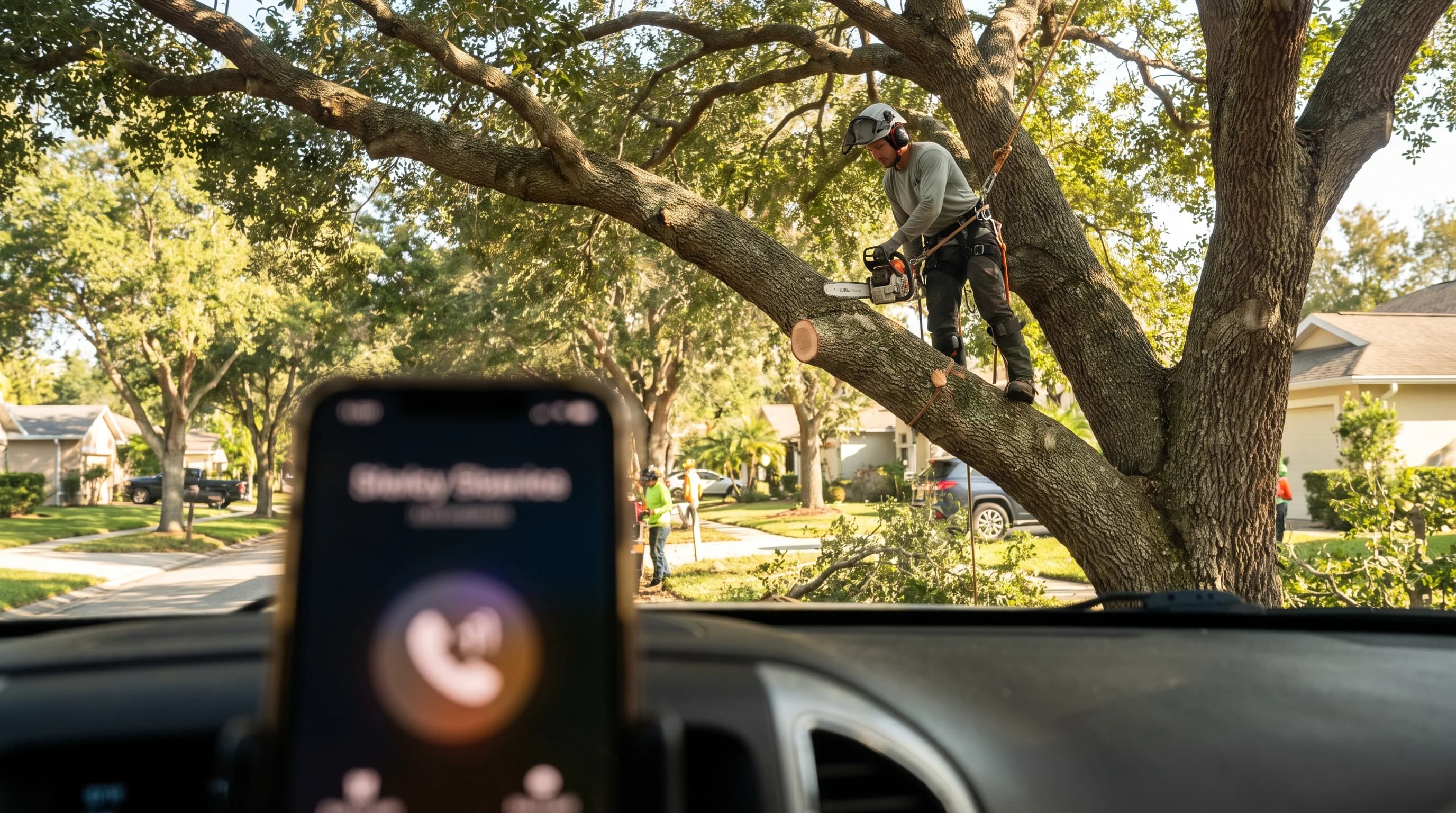
A missed call in the trades is not a missed call. It is a missed job. For a tree service, that is $1,000 to $8,000 gone. For a hardscaper, a paver patio worth $5,000 to $50,000. For an irrigation crew, an install and years of tune-ups.
Now put a number on how many calls you miss. You are up a tree, running a skid steer, or elbow-deep in a valve box. The phone rings and you cannot get to it. That happens several times a day for most owners. Every one of those rings is a homeowner with money in hand, and most of them are not going to leave a voicemail and wait.
That is the leak. Missed call text back for contractors is the cheapest patch for it, and you can have it running before the weekend. This post covers the real cost of a missed call, why a text beats a voicemail, and how to set the system up without overthinking it.
The math on a missed call
Start with what a call is worth. In these trades the ticket sizes are large, so the cost of losing one is large too. Tree removal runs $1,000 to $8,000 or more. Hardscape projects land anywhere from $5,000 to $50,000. Even a "small" irrigation repair often turns into a service relationship worth far more than the first invoice.
Now the response side. A caller who does not reach you rarely waits around. Think about your own behavior when you need a service today: you call the first company, and if nobody answers, you call the next one on the list. Most homeowners do exactly that. The company that answers, or responds fastest, tends to win the job before the slower ones even know it existed.
The research backs up the instinct. A landmark Harvard Business Review study of how firms respond to online leads found that companies that tried to contact a lead within an hour were far more likely to have a meaningful conversation than those that waited longer, yet the average firm took around 42 hours to respond at all. The gap between the fast movers and everyone else is enormous, and it is where jobs are won.
You do not need a study to feel it. Every owner has driven past a competitor's truck in a driveway and thought, "That was my call." Missed call text back exists to make sure the first move is yours, automatically, even when your hands are full.
Why a text beats a voicemail
Voicemail is where leads go to die. Half the people who reach it hang up without leaving a message, and the ones who do leave a message expect a callback on their timeline, not yours. By the time you climb down and listen, the homeowner has often already booked someone else.
Text is different for a simple reason: almost everyone has a phone in their pocket and reads texts fast. According to the Pew Research Center's data on mobile phone ownership, the overwhelming majority of American adults own a cellphone, and texting is one of the most used features across every age group. A text meets the customer where they already are.
Here is the flow that plays out when the system is on:
- A homeowner calls while you are on a job.
- The call goes unanswered.
- Within seconds, an automatic text goes to that caller.
- The homeowner texts back what they need.
- You reply when you are safely off the ladder, with the lead still warm.
The caller never hits a dead end. Instead of silence, they get a response that says you are a real business that noticed them. That is often enough to stop them from dialing the next contractor.
What a good text back message says
Keep it short, human, and useful. A strong missed call text does four things: names your business, acknowledges the call, tells the person what happens next, and gives a rough timeline. All of that fits in a sentence or two.
A message along these lines works well:
Hi, this is Dave with Central Florida Tree Co. Sorry I missed your call - I'm on a job site right now. What can I help you with? I'll get right back to you.
That reads like a busy owner, not a marketing machine. It invites a reply, sets expectations, and keeps the door open. Avoid anything that promises a price, a specific appointment time, or a guarantee before you have even talked. The goal is to keep the conversation alive, not to close on autopilot.
You can tailor the message by trade. An irrigation company might ask whether it is an emergency leak or a routine tune-up. A hardscaper might ask what kind of project the homeowner is picturing. A tree service might ask whether it is storm damage or planned work, which also helps you triage the urgent calls first.
Where the system quietly breaks
Turning on the text is the easy part. The failures happen after.
Nobody follows up on the reply. The automation buys you time; it does not do the selling. If a homeowner texts back and then hears nothing for six hours, you have just annoyed them more efficiently. Someone has to own the follow-up.
The number is not monitored. If missed-call texts land in an inbox nobody checks, warm leads go cold in a different place. Route the replies somewhere a human actually watches.
There is no record of what happened. Without a simple pipeline, you cannot tell which texts turned into quotes and which quotes turned into jobs. You are flying blind on the one channel that is quietly saving your bacon.
This is exactly why the text-back is one piece of a bigger system rather than a standalone gadget. Reliable follow-up, a shared inbox, and a simple record of every lead are the difference between a cute automation and real booked revenue. Building that follow-up into something your crew does not have to think about is the heart of our growth system for outdoor service businesses. The automation catches the lead; the system makes sure it turns into a job.
Set it up without overthinking it
You do not need an enterprise phone system. Most missed call text back tools connect to your existing business number, detect an unanswered call, and fire a text you have written in advance. Setup is usually an afternoon, not a project.
The pieces you actually need:
- A business number the tool can watch for missed calls.
- One well-written default message, plus a couple of trade-specific variations.
- A single inbox or app where replies land, checked by a real person.
- A habit of following up the same day, every time.
If you already run a CRM or a field service app, check whether it includes this before you buy anything new. Many do. The point is not the brand of software; it is that no ringing phone goes fully unanswered again.
For owners weighing the cost, the honest way to think about it is against your ticket size. If one recovered call books a single tree removal or paver job, the automation has paid for a year of itself. Our transparent pricing and packages show how this kind of follow-up fits into a full system, so you can see what you are buying before you commit to anything.
The one number to fix this week
Forget the software comparison for a minute. The metric that actually moves your revenue is your response time to a lead you could not answer live. Right now, be honest about what it is. If a homeowner calls at 8:15 while you are on a job and the first thing they hear from you is a callback at 5 p.m., you are losing those jobs to whoever texted back at 8:16.
Missed call text back drops that response time from hours to seconds without you touching your phone. It will not fix a weak follow-up habit, a website that does not convert, or a Google profile with no reviews. What it will do is stop the specific, expensive leak of calls you physically cannot answer from a job site.
Measure your current response time, get the text-back running, and then make sure a human owns the follow-up. If you want that follow-up wired into a system built for the way trades actually work, a marketing partner for tree service and outdoor businesses is what turns caught calls into a booked schedule.