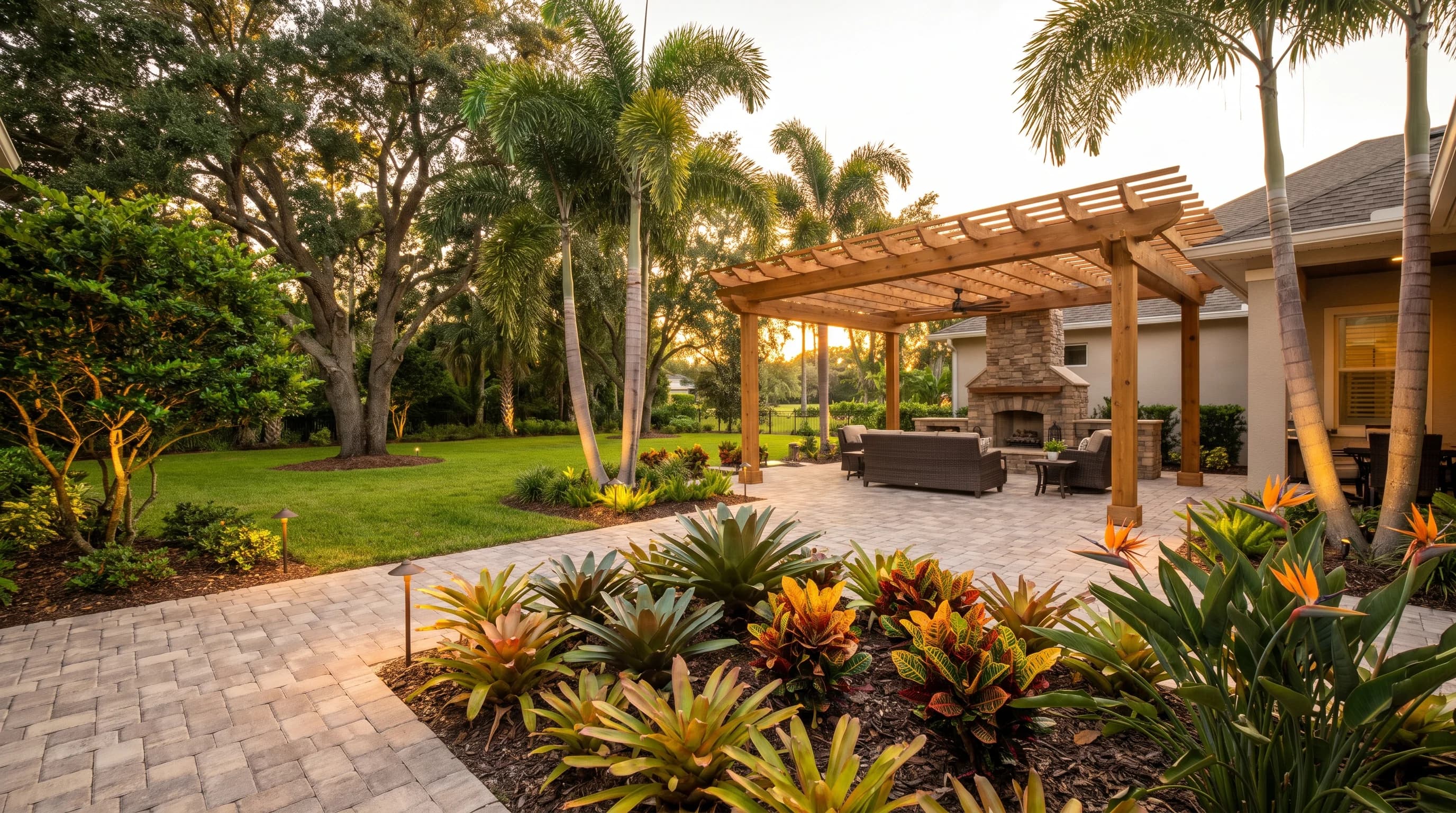
You met the homeowner back in April. They walked you through the backyard, loved three projects in your portfolio, and told you the budget was there. You sent a thoughtful proposal, they said they needed to talk it over, and then the line went quiet.
It is now late July. You drove past the house last week and the new paver patio, pergola, and planting beds are already in. Someone built it. It just was not you.
That is the quiet way design and build firms lose work. Not to a cheaper bid on the same day, but to the weeks of silence in between, where a better-marketed competitor stayed visible and you did not. Landscape design marketing is the system that keeps you in the conversation the whole time a homeowner is deciding, so the job that was yours in April is still yours in July.
Why design and build marketing is a different game
Most landscaping marketing advice is written for mowing and maintenance. That work is a small, fast decision. A homeowner needs their lawn cut, they call two companies, they pick one this week, and the ticket is modest.
Design and build is the opposite on every axis. The project is large, often a full outdoor living space with hardscape, plantings, lighting, and drainage. Industry ranges vary widely, but a serious design and install job can run from around $15,000 to well over $100,000 (illustrative industry ranges, not our client results). Nobody spends that on a whim.
So the buyer behaves differently. They collect ideas for weeks. They drive their own neighborhood looking at recent work. They shortlist three or four firms, study each portfolio, and only then start booking consultations. The decision can stretch across a whole season.
The demand is real and steady. The U.S. Bureau of Labor Statistics projects ongoing employment in grounds maintenance and landscaping occupations over the coming decade, a sign of a trade that keeps growing, and with it the number of firms competing for the high-ticket end. Winning that end is less about shouting louder and more about being the firm a careful buyer trusts after months of looking.
Your portfolio is your best salesperson
For a maintenance company, the sale is a price and a schedule. For a design build firm, the sale is a picture of the life the homeowner wants in their backyard. That means your portfolio does more selling than anything you will ever say out loud.
Treat it like the money page it is. Every finished project should show up as a small story, not just a photo:
- A wide before shot of the tired, empty yard.
- The finished after shot from the same angle.
- Two or three lines on what the family wanted and how you solved a real problem, like a slope that never drained or a patio too small to host on.
Buyers of high-ticket work are matching your style to the picture in their head. The firm whose portfolio looks the most like their dream, and reads like it was built by people who think, gets the call. This is exactly why a portfolio-led site sits at the center of a complete growth system for landscaping companies rather than being treated as an afterthought gallery.
Show up while they are still just looking
Here is the gap almost every landscape design marketing guide skips. They all tell you to rank on Google and answer the phone fast. That is fine, but it only catches the buyer at the very end, on the day they finally search.
The expensive part of the journey happens long before that search. For weeks or months the homeowner is gathering inspiration, asking neighbors, and forming a shortlist entirely in their head. If the only time you exist is the moment they type "landscape designer near me," you are invisible for most of the decision, which happens well before that search.
Staying visible during that stretch is where jobs are actually won:
- Post finished projects steadily, so a homeowner following you sees fresh proof every few weeks, not a page that died last spring.
- Get your signs and trucks into the neighborhoods you want more work in. A yard sign on a project that neighbors admire is marketing that runs for the entire build.
- Publish a little education, like a short piece on why an integrated design and build team avoids the costly change orders that happen when a separate designer and installer point fingers. That answers a real fear a high-ticket buyer has.
The goal is simple. When the homeowner finally decides they are ready, you are not a stranger they have to research. You are the firm they already trust.
Reviews and referrals: the trust engine for expensive work
Nobody hands over $60,000 to a company they cannot verify. For high-ticket landscape work, reviews and referrals are not vanity, they are the collateral that makes a big check feel safe.
Referrals have always driven this trade. Industry bodies like the National Association of Landscape Professionals exist because word of mouth and reputation carry so much weight in green-industry work, and a neighbor who loves their new backyard is the most convincing ad you will ever get.
Reviews are the online version of that neighbor. A strong Google Business Profile, full of recent project photos and genuine reviews, is often the first thing a shortlisted buyer checks. Google's own guidance is clear that you should reply to the reviews customers leave, because active, responsive profiles read as trustworthy, and it is worth keeping fresh photos on the profile so the work speaks before you do.
Nurture the long cycle instead of letting quiet leads die
Back to the April homeowner. The reason you lost that job is almost never that they hated your proposal. It is that a design and build decision is slow, life got busy, and the firm that gently stayed in touch was the one still on their mind when the season and the budget finally lined up.
Most owners treat a quote as a coin flip. They send it, and if the phone does not ring, they assume it is dead. On short-cycle work that is roughly true. On a project worth, say, $60,000 that a family has been dreaming about for two years, a silent quote is not a no. It is a maybe that needs a nudge.
A simple, patient follow-up system is what turns those maybes into signed contracts:
- A friendly check-in a week after the proposal, then again a few weeks later, then seasonally.
- A note when you finish a project like theirs nearby, with a photo. "Thought of your backyard when we wrapped this one two streets over."
- One clear place where every quote lives so none of them slip through the cracks while you are on a job site.
Doing this by hand across dozens of open quotes is where it breaks down, because the owner is the estimator and the estimator is always busy. Wiring the follow-up so it runs on its own is exactly what our growth system for home service companies is built to handle, and transparent pricing for it lives on our packages page so you can see what it costs before you commit.
Where the leads actually come from
None of the above requires you to be everywhere. High-ticket design and build work flows from a short list of channels, and doing four of them well beats doing ten badly:
- A portfolio-first website that ranks for local design and build searches and converts the buyers who land on it.
- Google Business Profile with recent photos, replied-to reviews, and correct service areas.
- Referrals, actively asked for after every project, plus relationships with architects, builders, and realtors who feed larger jobs.
- Follow-up, the unglamorous system that catches the slow-cooking projects everyone else lets go cold.
Paid ads can add volume on top of that, but only after the first four are solid. Running ads to a thin website with no reviews just pays to send high-ticket buyers to a page that fails to convince them.
If you sell projects, market like it
Landscape design marketing is not lawn care marketing with nicer photos. The whole shape of the sale is different, so the marketing has to be too.
If your revenue is mostly maintenance and small jobs, keep it lean. Answer fast, stay reachable, and win on responsiveness, because those decisions are quick and volume is the game.
But if you are chasing design and build projects worth tens of thousands of dollars, market for the long, careful decision those buyers actually make. Put your portfolio at the center, stay visible while they are only looking, stack up reviews and referrals as proof, and follow up on every quiet quote like the job is still alive, because it usually is.
When you are ready to build that into one system instead of a pile of good intentions, that is what a growth system built for landscaping firms is for. The homeowner who went silent in April is still deciding. Make sure yours is the name they remember in July.