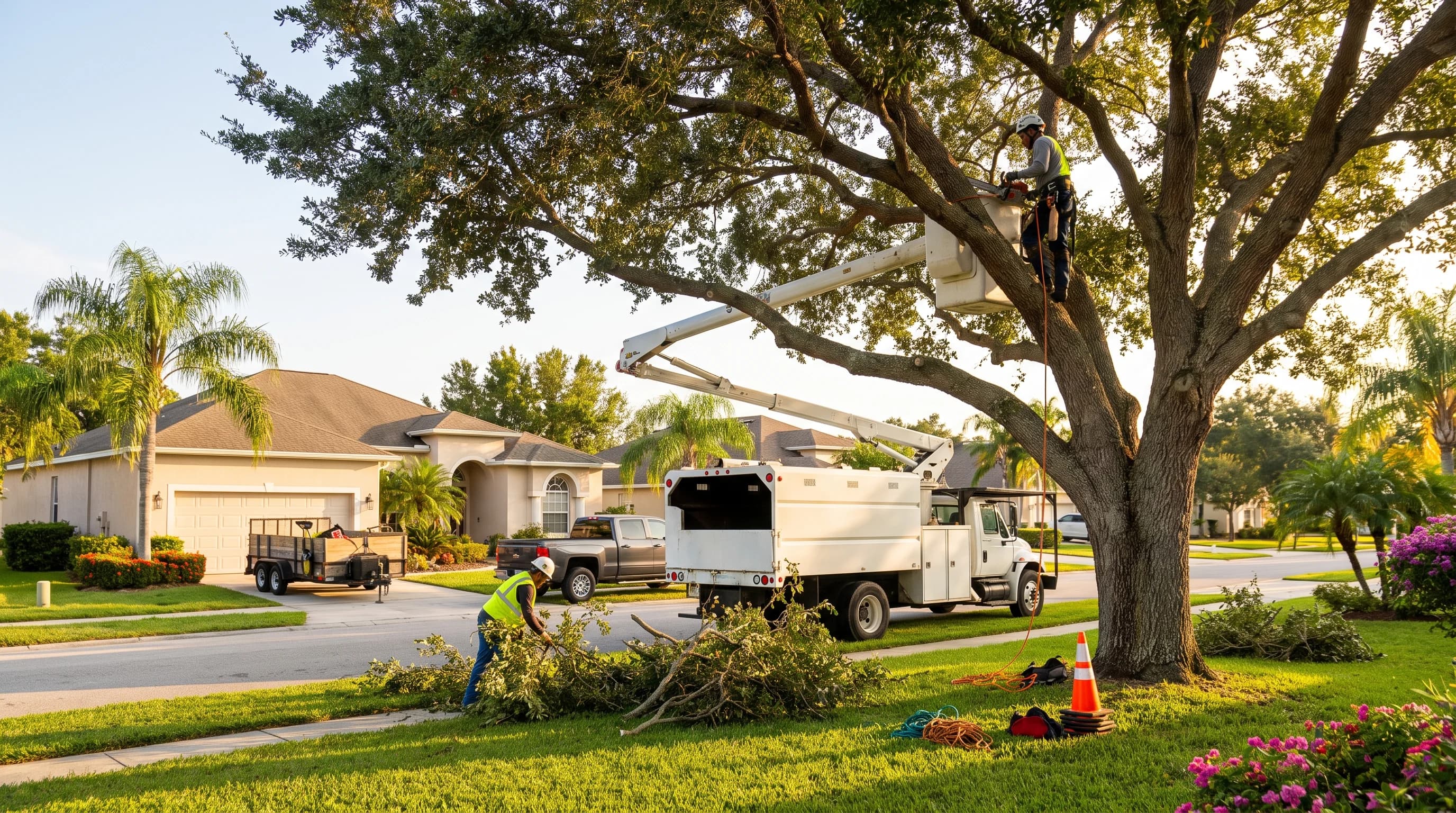
A single tree removal in Central Florida is worth roughly $1,000 to $8,000. A click on a Google Ads search result for that job might cost you $15, $30, sometimes more in a competitive week. So the real question is not "are clicks expensive." The real question is how many clicks you can buy before one of them turns into a job that pays for all of them.
That is the honest way to think about Google Ads cost for contractors. It is not one number on an invoice. It is three numbers stacked on top of each other: what a click costs, what a lead costs, and what a booked job costs. Get those three straight and you can decide in an afternoon whether paid search belongs in your budget. Miss them and you burn money fast.
Google Ads cost is really three prices, not one
Owners ask "how much does Google Ads cost" expecting a monthly figure. But Google does not sell you a package. You set a daily or monthly budget, and the system spends it one click at a time in a live auction. So your cost breaks into layers.
- Cost per click. What you pay each time someone taps your ad. You set a maximum bid, and Google's cost-per-click bidding means you are often charged less than that max.
- Cost per lead. Clicks are not calls. If it takes 10 clicks to get one phone call, your lead costs 10 times your click price.
- Cost per job. Leads are not jobs. If you close one in three calls, your job costs three times your lead price.
Only the last number matters for your bank account. A $30 click sounds steep until you trace it forward: ten clicks to a lead, three leads to a job, one job worth $4,000. That is $900 in ad spend for a $4,000 removal. The click price was never the point.
What a click actually costs in the trades
Click prices swing wildly by service, by city, and by season, so treat any published range as a starting guess, not a quote. As illustrative industry ranges, clicks in low-competition home service niches can run a few dollars, while high-intent emergency terms in a crowded metro can climb past $50 a click. Tree work, water damage, and anything with the word "emergency" tends to sit at the expensive end because the jobs behind those searches are large and urgent.
A handful of factors move your number up or down:
- Competition in your area. More companies bidding on the same words pushes prices up. A dense Orlando suburb costs more per click than a rural county.
- Urgency of the search. "Emergency tree removal" costs more than "tree trimming quote" because the buyer is ready now and everyone wants them.
- Season. During hurricane season, storm-damage clicks spike right when demand does. Your click price and your competition both peak in the same weeks.
- Quality Score. Google rewards relevant ads with lower prices. More on that below - it is the one factor you fully control.
Because these ranges move so much, do not budget off someone else's blog number. Run a small campaign for two weeks, watch your own cost per click in your own zip codes, and build the real budget from that.
The math that tells you if it is worth it
Here is the calculation almost no cost article walks a contractor through, and it is the only one that matters.
Start at the job and work backward. Say your average job is worth $3,000 and you close one of every three serious quotes. That means a booked job is worth three quotes to you. If you would happily pay $300 to book a $3,000 job, you can afford $100 per quote-ready lead.
Now go one layer out. If it takes eight clicks to produce one of those leads, you can afford about $12 per click and still hit your target. If clicks in your market cost $25, the math does not close - not because ads are bad, but because too few clicks become calls. That usually points at the website and the phone, not the ad.
This is exactly why paid ads sit near the end of a real growth system, not the start. If you want to see how the pieces fit together - fast lead response, follow-up, tracking - our growth system for home service companies is built around making each paid click actually convert, and the pricing for those packages is public so you can weigh it against your own job math.
Local Services Ads: paying per lead instead of per click
There is a second Google product that changes the cost model entirely. Local Services Ads sit above the regular search ads with the "Google Guaranteed" badge, and instead of charging per click, they charge per lead - a real phone call or message from someone in your service area.
For a lot of contractors this feels safer, because you are paying for contacts rather than for taps that may go nowhere. Pricing still varies by trade, location, and job type, and you can dispute leads that are clearly not a fit. Local Services Ads and regular Google Ads run separately, and plenty of companies use both: pay-per-lead for the bread-and-butter calls, pay-per-click to control the exact searches they show up for.
If most of your work is fast, local, and phone-driven - the kind of jobs a homeowner books the same day - the pay-per-lead model is often the easier place to start. We walk tree companies through that setup in our guide to a complete growth system for tree service companies, where emergency calls make the pay-per-lead model especially strong.
When the cost is worth it, and when it is not
The seasonal, urgent nature of outdoor work changes the answer month to month, and generic cost guides miss this completely.
Paid search tends to be worth it when:
- Your average job is large enough that one booked job covers many clicks. Tree removal, hardscape installs, and irrigation system work all clear that bar easily.
- Demand is spiking and you have crew capacity - storm season for tree work, spring for landscaping, the first heat wave for irrigation.
- You answer fast and follow up, so the clicks you pay for actually turn into booked work.
It tends to waste money when:
- You bid on emergency keywords in your slow season, paying peak prices for thin demand.
- Your calls go to voicemail, so you buy the click and a competitor gets the job.
- Your average ticket is small and repeatable, where reviews and referrals usually out-earn paid clicks.
The move most owners miss is turning campaigns down in the off season and up when their own demand curve rises. Your click price and your close rate both shift with the calendar. Spending the same every month ignores that.
How to pay less per click without lowering your bid
You do not lower Google Ads cost mainly by bidding less. You lower it with relevance. Google measures how well your keyword, your ad, and your landing page match what the searcher wanted, and it charges relevant advertisers less for the same position.
Three moves that pull your cost down:
- Match the search exactly. A searcher who types "stump grinding near me" should see an ad that says stump grinding and land on a stump grinding page - not your generic homepage.
- Cut the searches you do not want. Add negative keywords like "jobs," "free," "DIY," and "salary" so you stop paying for clicks that will never book.
- Make the landing page fast and specific. A page that loads quickly on a phone, shows real photos, and puts a click-to-call button up top converts more of the clicks you already paid for, which lowers your true cost per job.
None of that requires a bigger budget. It requires the ad and the page to earn the click, which is the same discipline that makes every other channel work.
Your this-week checklist
You do not need a full campaign to get a real answer on cost. Do these four things before Friday:
- Write your three numbers. Average job value, close rate out of ten quotes, and the most you would pay to book one job. That is your ceiling for cost per lead and cost per click.
- Search your own top service in an incognito window. See who is running ads in your area right now and what they promise. That is your live competition.
- Check your phone reality. Call your own business line during a busy hour. If it rings out or hits voicemail, fix that before you spend a cent on clicks.
- Pick one model to test. Pay-per-lead through Local Services Ads for fast local calls, or a tight pay-per-click campaign on one high-value service. Start small, watch your own numbers for two weeks, then scale what pays.
Google Ads cost for contractors is only high when the clicks land somewhere that cannot convert them. Get your job math straight, make sure the phone gets answered, and the click price stops being scary - it becomes just the first of three numbers you already know how to read. When you want that built into one system instead of a guess, that is what our transparent growth packages are for.