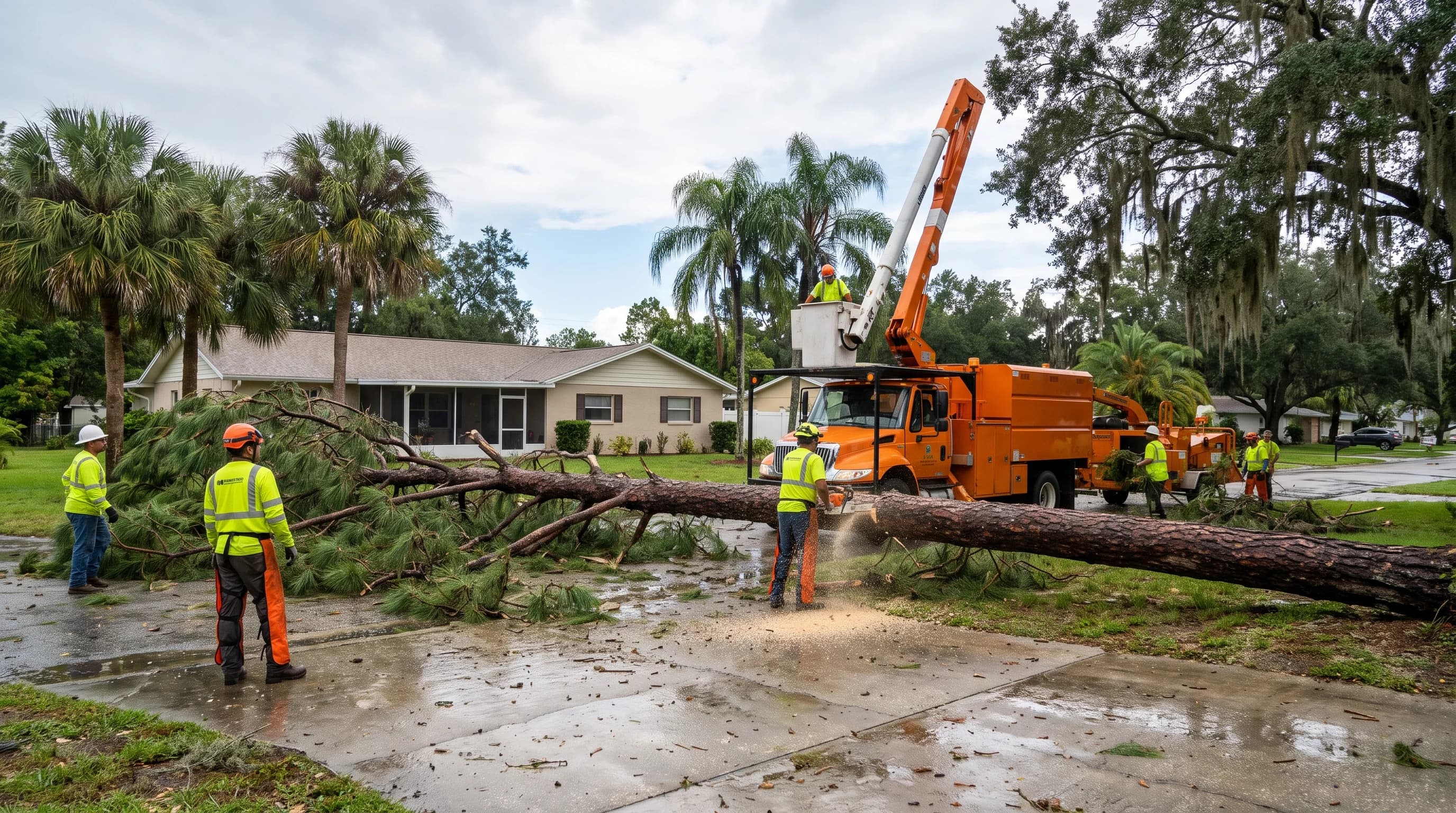
The power is out, a pine is lying across your neighbor's driveway, and your phone has rung four times before your first coffee. Three of those callers already dialed two other companies. Whoever answers, quotes, and shows up first gets a $2,000 to $6,000 removal today. The other two get voicemail and move on.
That is storm season for a tree service. The demand does not trickle in - it arrives all at once and disappears within days. Storm damage tree removal leads are the highest-intent, highest-ticket calls you will get all year, and most companies capture a fraction of the ones sitting in their own service area.
The difference between the crews that book out and the ones that miss the window is almost never talent or price. It is preparation. This is the playbook for turning a storm into a full calendar without leaving town.
Storm season is a lead surge you can plan for
Weather feels random, but the calendar is not. The Atlantic hurricane season runs on a schedule you can mark on the wall. According to the National Hurricane Center, the Atlantic hurricane season runs from June 1 to November 30, with activity peaking around September 10 and most storms landing between mid-August and mid-October.
For a tree service, that is not trivia. It is a demand forecast. You know months in advance that the busiest, most profitable stretch of your year is coming and roughly when it will hit hardest. In Central Florida, where afternoon storms and hurricane threats are a way of life, that window drives a huge share of annual removal revenue.
Treat it like the season it is. A retailer does not start decorating for the holidays on December 24. A tree company that starts thinking about storm damage tree removal leads the morning after a hurricane has already lost the first and best wave of work.
Win the rush in the calm before the storm
Everything that captures storm calls has to be built when the weather is boring. Here is what "ready" actually looks like.
Your Google Business Profile is set up for emergency work. When a homeowner searches "emergency tree removal near me" with a limb through the garage, the map results decide who gets called. Make sure your profile lists the right primary and secondary categories, your service area is accurate, and your photos show storm cleanup and big removals, not just neatly trimmed hedges. Google's own guidance on adding and editing your business categories walks through the setup. This is free and it is the single highest-leverage thing most companies leave half-done.
A storm damage page is already live on your site. Not a page you build after the storm - one that has been indexed for weeks, ready to rank and ready to convert. It should name the specific work (downed trees, hanging limbs, trees on structures), promise fast response, and put a click-to-call button at the top so a panicked homeowner on a phone can reach you in one tap.
Your review engine never stopped running. Reviews are the proof that makes a stranger call you first. As an example, a company with 180 recent reviews tends to win the emergency call over one with a dozen, every time. Do not wait for storm season to start asking - build the habit year round so you walk into the surge already credible.
Do this prep once and it pays off every storm for years. Skip it, and you are rebuilding the plane while it is falling.
Answer first, or the lead is gone
Storm leads have the shortest shelf life in the trades. A homeowner with a tree on the roof is not comparison shopping for a week - they are calling down the list and hiring the first company that answers live and commits to a time.
That means your response speed matters more than your pricing during a surge. In the first 24 to 48 hours after a storm, the job usually goes to whoever picks up, not whoever is cheapest.
The problem is obvious: during a storm your crews are already out working, and nobody is sitting by the phone. So the calls that could have been booked go to voicemail and then to your competitor.
The fix is a system, not more hustle. Route every call and form to a phone someone actually carries. The moment a call is missed, fire an automatic text back so the caller knows a human is coming instead of assuming you are closed. Give one person the single job of first contact so leads are not waiting on a crew lead who is 40 feet up a tree. Wiring that speed-to-lead response so it runs without you is exactly the kind of automation built into our growth system for tree service companies, and during storm season it is the difference between a full week and a quiet one.
Do not be a storm chaser - be the prepared local pro
There is a version of storm work that is a trap. Crews chase hurricanes across state lines, undercut local prices, do rushed work, and leave. Homeowners have been burned by it enough that many now distrust the out-of-town truck with no local reviews and no address.
That reputation is your opening. Be the opposite: the established local company that was already here, already reviewed, and already ready. When a storm hits your own service area, you do not need to chase anything. The surge is in your backyard, and you built the pipeline to catch it.
Leaning into that trust also means doing the work right. Storm-damaged trees are dangerous, and homeowners are increasingly told to hire qualified professionals rather than roll the dice. The International Society of Arboriculture's consumer guidance on caring for storm-damaged and mature trees reinforces the message you want to own: this is skilled, hazardous work for credentialed pros, not a weekend job for a guy with a chainsaw. Position yourself there and the price objection softens on its own.
Turn one storm job into a recurring account
Here is the part almost everyone leaves on the table. A storm sends you a customer once. Your follow-up decides whether they are a customer for years.
You just did stressful, high-stakes work at someone's home under pressure, and you did it well. That is the moment trust is highest. Most companies collect the check and vanish. The ones that grow do something simple instead: a text or call about 30 days later to check on the property and offer a health assessment of the trees that survived.
That one touch converts a one-time emergency into pruning, cabling, removals, and seasonal work that shows up on the calendar long after the storm is forgotten. It is also how you stop living storm to storm. The emergency work spikes your revenue; the recurring accounts you build from it smooth the valleys in between. Automating that follow-up rhythm, instead of hoping you remember after a 12-hour day, is the quiet engine behind steady tree service revenue, and it is why our transparent pricing and packages are built around the whole pipeline, not just the first call.
A quick, honest word on ad spend
Paid search works during a surge because intent is sky-high, but the numbers move fast. As an illustrative example, a tree company might see cost per lead swing from a calm-week figure to something much higher the day a hurricane makes landfall and every competitor bids up the same "emergency tree removal" keywords at once. Treat any specific cost-per-lead figure you read online as illustrative, not a promise - your real number depends on your market and how well your phone converts.
The takeaway is not "spend more." It is that ads only pay off if the earlier steps are in place. Pouring budget into storm keywords while your calls go to voicemail just buys you expensive missed opportunities. Fix the capture first, then turn on the spend.
Your before-the-storm checklist
The next storm in your area is a question of when, not if. Before it hits, knock out these four things this week:
- Audit your Google Business Profile today. Confirm your categories cover emergency and storm removal, your service area is right, and your recent photos show real storm cleanup work.
- Publish or refresh a storm damage page with fast-response messaging and a click-to-call button at the top, so it is indexed and ready before you need it.
- Set up missed-call text back on your main line so no storm lead ever hits dead-air voicemail while your crews are out working.
- Send review requests to your last 20 customers and make it a weekly habit, so you walk into peak season more credible than the company down the road.
Do those four and the next storm becomes the most profitable week of your year instead of the one that got away. If you would rather have that whole pipeline built and running for you before hurricane season peaks, that is exactly what a complete growth system for tree service companies is for.