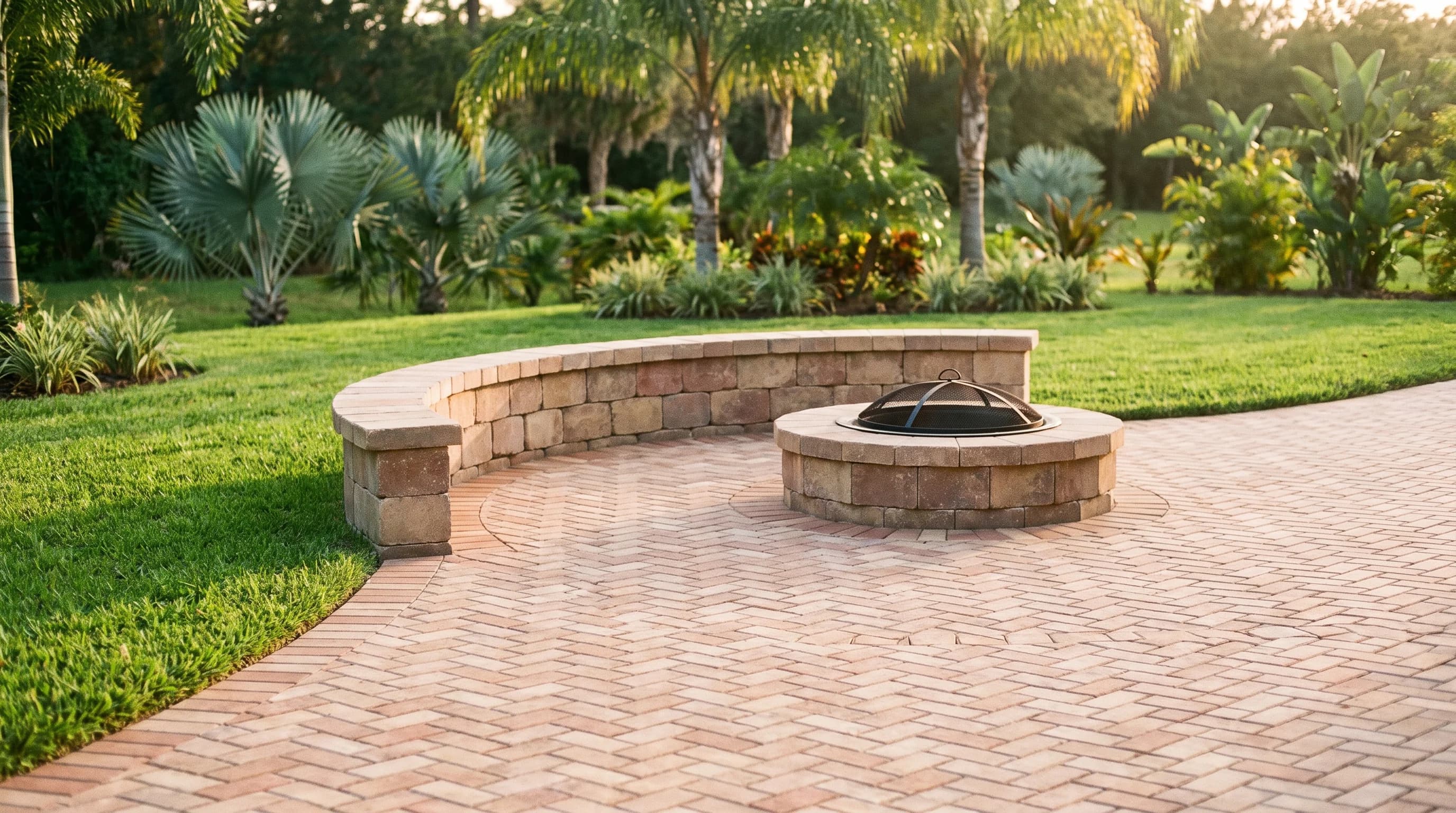
The homeowner filled out your form on a Sunday night. Big backyard, wants a paver patio with a seating wall, maybe a fire pit. This is a $20,000 job, exactly the kind you want. You see the email Monday afternoon between installs, mean to call back after dinner, and forget. Wednesday you finally reach out. She has already met with two other contractors and one is coming to measure Thursday. You never had a chance.
That is how most paver contractor leads are lost. Not because there were too few of them, and not because the marketing failed. The inquiry arrived. It just went cold on a workbench while a crew was out laying base.
Getting paver contractor leads is the part everyone obsesses over. Turning them into signed patio and driveway jobs is where the money actually is, and it is the part almost nobody systematizes. This post covers both, in the order that matters for a high-ticket, slow-decision purchase.
Own your pipeline before you rent it
Most articles about paver contractor leads point you straight at a lead marketplace: pay a fee, get a name, go close it. That has its place, but understand what you are buying.
Many lead marketplaces sell the same inquiry to several contractors at once. You are not buying a customer. You are buying the right to race three other companies to the phone, then compete on price before you have shown a single photo of your work. It can work as a stopgap, but it should never be your only channel.
The leads that compound are the ones you generate yourself, because they are exclusive to you. Three of them cost less over a year than a marketplace that resells every name:
- Your Google Business Profile. For "paver patio near me" and "driveway pavers [city]" searches, your profile is often the first thing a buyer sees. Fill it with real, recent project photos. Google's own guidance is that businesses that add photos to their Business Profile help customers see what they offer, and for a visual trade like hardscaping the gallery is the pitch.
- Local Services Ads. These run above the regular ads with a Google Guaranteed badge and charge you per lead, not per click. Google's Local Services Ads help walks through the setup and background-check process. For a trust-heavy, high-ticket install, that badge earns its keep.
- Service pages you own. A dedicated page for paver patios, another for driveways, another for pool decks, each with a gallery and a click-to-call button. These rank over time and cost nothing per lead once they exist.
Build those and every marketplace lead becomes a supplement, not a lifeline. That shift, from renting leads to owning a pipeline, is the whole idea behind a complete growth system for hardscaping companies: the channels feed each other instead of you starting from zero every month.
Speed to lead: the 5-minute rule for big jobs
Once the leads arrive, the single biggest lever is how fast you respond.
The classic research here is Harvard Business Review's study on online lead response, which found that companies contacting a web lead within an hour were far more likely to reach and qualify the buyer than those who waited even a few hours, and that the odds fell off a cliff after the first hour (The Short Life of Online Sales Leads). That study is not about pavers, but the behavior is human: a homeowner who just decided to spend $20,000 is anxious, motivated, and calling around. Whoever answers first sets the frame.
For a crew that is on job sites all day, "answer within five minutes" sounds impossible. It is not, if the system does part of the work:
- Route form fills and calls to a phone someone actually carries, not an inbox checked at night.
- Auto-reply the second a form comes in, so the buyer knows a human is coming even if you are 40 feet into a backyard.
- Give one person, even a spouse or office helper, the job of first contact within the hour.
Sell with proof, not price
Paver buyers are not comparing spec sheets. They are trying to picture the finished patio and decide who they trust to build it. That means your proof does more selling than your quote.
Three things move a high-ticket hardscape buyer:
- Before-and-after photos of jobs like theirs. A buyer wanting a travertine pool deck needs to see your travertine pool decks, not a generic paver driveway. Sort your gallery by project type.
- Reviews that name the work. A review that says "they built our 600-square-foot paver patio with a seating wall and it survived hurricane season" is worth ten that say "great service." Ask for specifics.
- A clear, itemized quote that a homeowner can read. Base prep, drainage, paver type, edge restraint, labor. When a buyer understands what they are paying for, the low bid with none of that detail starts to look risky, which is exactly right.
None of this fabricates anything. It is the honest presentation of work you have already done, organized so a nervous buyer can say yes.
Follow up until they decide or say no
Here is the gap that quietly costs the most jobs: the one-and-done quote.
A paver patio decision can take weeks. The homeowner is getting bids, checking their budget, maybe waiting on a spouse. The contractor who quotes once and goes silent reads as "not that interested." The one who checks in twice, answers a new question, offers to walk the yard again, reads as the professional who wants the job.
You do not need a fancy tool to start. You need a rule: every quote over a certain size gets a follow-up at day 3, day 7, and day 14 unless the buyer has already said yes or no. A short text or call each time. That single habit recovers jobs that were never lost on merit, only on silence.
Wiring that follow-up so it runs on its own, instead of depending on you remembering after a 10-hour install day, is exactly the kind of automation built into our growth system for outdoor service companies. The marketing fills the pipeline. The follow-up is what turns those paver contractor leads into signed contracts.
Do this next, based on where you are stuck
Paver contractor leads are not one problem, they are a chain, and yours is probably breaking at one specific link. Find yours and fix that first:
- If your phone barely rings, your problem is visibility. Start by loading your Google Business Profile with real project photos and standing up service pages for patios, driveways, and pool decks. That is the foundation the paid channels amplify.
- If leads come in but go cold, your problem is speed and follow-up, not lead volume. Buying more leads will only waste more of them. Put a five-minute response and a 3-7-14 follow-up rule in place this week, before you spend another dollar on ads.
- If you get to quotes but lose them on price, your problem is proof. Rebuild your gallery around finished projects that match what buyers ask for, and gather reviews that name the specific work.
If you are not sure which link is breaking, that is worth diagnosing before you spend, and it is the honest starting point behind our transparent pricing and packages. More leads will not fix a pipeline that leaks in the middle. Plug the leak first, then pour in volume.