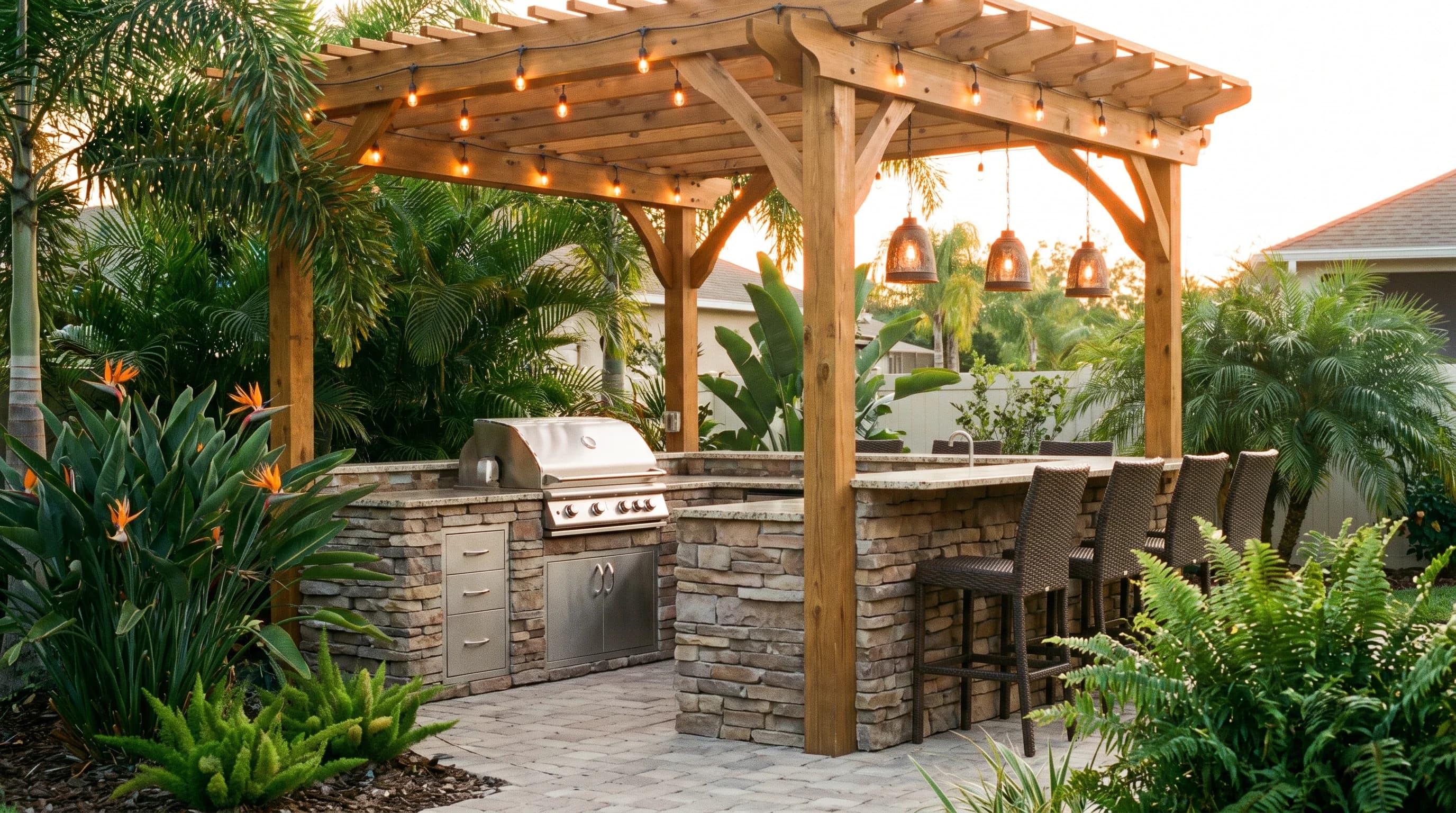
An outdoor kitchen build can run from roughly $15,000 for a modest setup to well past $80,000 for a full outdoor room with counters, appliances, a pergola, and a fire feature. Even at the conservative end, one signed contract can be worth more than a whole month of smaller patios or repairs.
So here is the math that should shape your outdoor kitchen marketing. If one job is worth $40,000 and you close one in four qualified consultations, then every serious lead is worth about $10,000 to you before you close it. A homeowner worth that much is not someone you let slip away because nobody followed up.
Yet that is exactly where most outdoor kitchen builders lose money. Not in the ad. In the long, quiet weeks between the first search and the signed contract, where the buyer goes cold and the builder never noticed. This guide is about winning those weeks.
The outdoor kitchen buyer is not in a hurry
A broken sprinkler is an emergency. An outdoor kitchen is a dream, and dreams take time.
Buyers of high-ticket outdoor living projects commonly research for three to six months before they sign. They save photos, price appliances, argue with a spouse about budget, wait for a bonus or a season, and quietly compare three or four builders the whole time. Nobody is calling the first company that answers.
That single fact should reshape how you market. A tree service wins on speed to answer. An outdoor kitchen builder wins on staying trusted and top of mind across a long consideration window. If your marketing is built to capture a lead and then quote fast, you are optimizing for a race that this buyer is not running.
Get found while they are still dreaming
Because the buyer starts with months of research, your first job is simply to keep showing up while they look. That is local search and a portfolio, not clever slogans.
Start with your Google Business Profile, because it is free and it is often the first impression. Google's own guidance on how to improve your local ranking points to complete, accurate information, genuine reviews, and a steady stream of real photos. For an outdoor kitchen builder, the photos are the marketing. Load finished builds, in-progress shots, and detail closeups of stonework, counters, and lighting.
Then give those searches somewhere to land. Your website needs a deep, well-organized gallery of finished outdoor kitchens, not three blurry photos on an "our work" page. Organize by style and feature so a buyer imagining a specific look can see you have built it before.
This is the same portfolio-led approach that wins design-heavy work across the trades, which is why we group outdoor kitchens, pergolas, and full backyard builds under a complete growth system for outdoor living companies. The buyer is shopping for proof, so lead with proof.
Run ads that filter out tire-kickers
Paid search has a place in outdoor kitchen marketing, but only if you use it to reach serious buyers, not everyone typing the word "grill."
Two settings do most of the filtering:
- Location targeting. These are local, in-person builds, so there is no reason to pay for clicks from outside your service radius. Google lets you target ads to specific locations so your budget stays on homeowners your crews can actually reach.
- Negative keywords. High-ticket intent and DIY intent look similar to a search engine. Adding negatives like "cheap," "DIY," "kit," and "used" keeps you from paying for clicks from people who will never hire a builder.
Cost per lead for high-end outdoor living is not cheap, and shared leads from a vendor are sold to several contractors at once, so you compete on speed and price the moment you buy them. Because a single build is worth so much, the number to optimize is cost per signed contract, not cost per click. As an illustrative example, a $250 lead that closes one job in four is a $1,000 acquisition cost against a $40,000 build. That is a bargain. The same $250 lead is a disaster if nobody follows up and it closes zero.
That difference is not the ad channel. It is what happens after the click.
The follow-up gap that loses six-figure jobs
Here is the gap almost every outdoor kitchen builder has and almost no competitor page talks about honestly.
You generate a lead. You do a site visit. You send a quote. Then the buyer goes quiet, because they were always going to take months, and you move on to the next fire. Ninety days later they sign with whoever was still in front of them. It was rarely the cheapest builder. It was the one who stayed helpful without being pushy.
Winning that window is a system, not willpower:
- Capture every lead in one place, not a mix of texts, voicemails, and sticky notes. You cannot follow up with people you cannot find.
- Respond to the first inquiry fast, even when the decision is slow. Speed early signals reliability, and a quick reply is often what earns the site visit over the builder who took two days.
- Stay in touch on a schedule. A short check-in every couple of weeks with a relevant photo, a design idea, or a seasonal note keeps you present without nagging.
- Make the quote a beginning, not an ending. After you send it, the follow-up is the sale.
Building that capture-and-follow-up engine is the highest-return marketing move an outdoor kitchen business can make, and it is the core of the Growth System we lay out on our services page. One recovered $40,000 build pays for years of it.
Sell the design, not the lowest price
When a buyer is spending this much on a permanent part of their home, the cheapest quote rarely wins. Trust and vision do. So structure your marketing and your sales step around a paid or clearly valuable design consultation rather than a race to the lowest number.
A design-led step does three things. It screens out buyers who only wanted a quick price. It lets you show expertise before anyone talks money. And it turns a free estimate into a real commitment that filters serious buyers from browsers.
Your website's main call to action should reflect this. "Book a design consultation" fits how this buyer decides far better than "Get a fast quote," which invites the exact price shoppers you do not want.
The one number to watch
If you track a single metric for your outdoor kitchen marketing, make it cost per signed contract, not leads or clicks or impressions.
Add up everything you spent to win jobs last quarter, divide by the number of contracts you signed, and hold every channel to that number. A channel that generates cheap leads that never close is expensive. A channel that produces a handful of leads that turn into $40,000 builds is the cheapest money you will ever spend, even if the cost per lead looks high on paper.
Run that number this quarter and it will tell you where to put next quarter's budget. When you are ready to build the follow-up engine that turns those long, quiet buying windows into signed contracts, our transparent packages on the pricing page show exactly what that looks like. Win the weeks between the first search and the signature, and the high-ticket jobs follow.