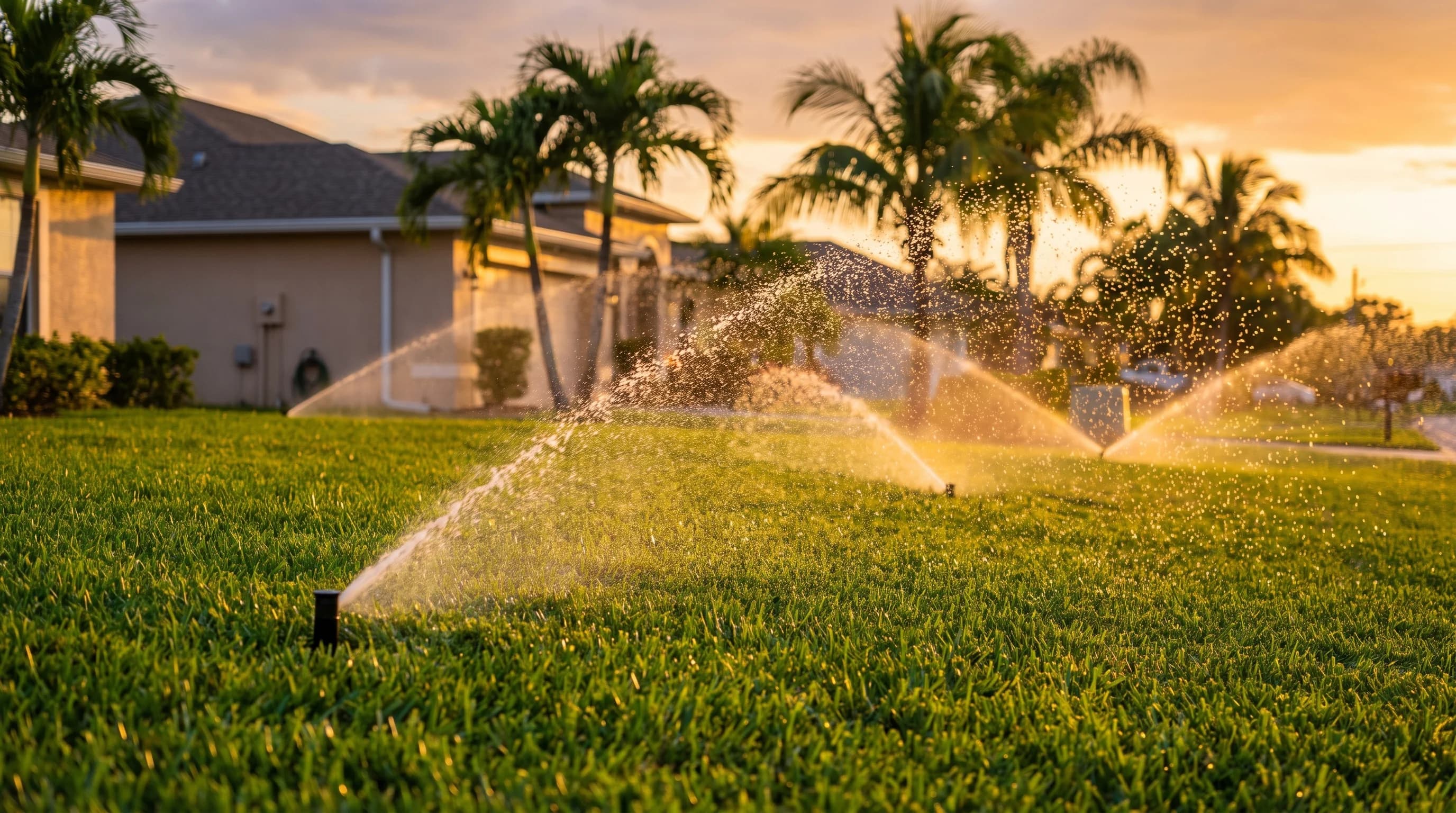
Most irrigation companies treat every repair call as a one-time transaction. A homeowner calls about a broken sprinkler head, you fix it, you collect the check, and you both move on. Then spring comes and you start hunting for leads all over again, from zero, like the last customer never existed.
That single habit is the most expensive mistake in irrigation company marketing. You already earned the hard part, a customer who trusts you enough to let you dig up their yard, and then you let them walk. The companies that win are not the ones with the cleverest ads. They are the ones that turn a $180 repair into a customer who pays them every season for years.
This guide is about building marketing on that idea: get found, answer fast, and never let a good customer become a stranger again.
Marketing an irrigation business is a retention game
Here is the math most owners never run. A one-time sprinkler repair might be worth $150 to $400. That same customer on a seasonal maintenance plan, with spring startups, mid-season checks, and repairs as they come up, is worth several times that every single year, and they refer neighbors along the way.
So the goal of your marketing is not just to ring the phone. It is to acquire customers you keep. That reframes every dollar. A lead that costs $60 looks expensive against one repair and cheap against five years of service.
Irrigation also runs on real, steady demand. According to the EPA's WaterSense program, residential outdoor water use accounts for nearly 8 billion gallons a day nationwide, mostly for landscape irrigation, and the average U.S. household uses more water outdoors than for showering and washing clothes combined. Systems that move that much water break, drift out of adjustment, and waste money when neglected. The work is there. The question is whether the homeowner calls you or the other truck.
Build your marketing on the watering calendar
Irrigation demand is not flat, and pretending it is wastes money. It spikes and dips with the season, and in Florida it follows the local watering rules more than the thermometer.
In much of Central and North Florida, the St. Johns River Water Management District sets year-round landscape watering schedules that shift between two days a week in the warmer months and one day a week in the cooler ones, with time-of-day limits and address-based days. During drought, the district can tighten those rules further. That calendar is your marketing calendar.
- Spring startup season is your biggest window. As homeowners turn systems back on, they discover cracked heads, stuck valves, and leaks. Be visible before they search, not after.
- Mid-season is repair and efficiency season. Higher water bills and dry spots drive calls. Content about fixing spray patterns and rain sensors earns attention now.
- Cooler months are for locking in maintenance agreements and pushing upgrades like smart controllers, so you are not idle and not starting spring cold.
The year-round growing season is a genuine advantage here. Unlike a company in the snow belt that goes dark for months, a Florida irrigation business can keep marketing and servicing all year. A steady base of marketing running through every season catches the work while seasonal competitors are still spinning back up.
Where sprinkler customers actually find you
When a zone stops working or a head is spraying the driveway, the homeowner grabs their phone and searches something like "sprinkler repair near me." Whether you show up decides whether you get the call. Two things do most of the work.
Google Business Profile. For local searches, Google shows a map pack of nearby businesses with reviews and photos above the regular results. Ranking there is the highest-value free thing most irrigation owners can do. Fill the profile out completely, pick accurate categories, post photos of real repairs and installs, and reply to every review. Google spells out the rules in its guidelines for representing your business on Google.
Service-specific pages. A single "Services" page that lists everything is weaker than separate pages for the things people actually search: sprinkler repair, irrigation installation, backflow testing, drip irrigation, smart controller upgrades, winterization. When someone searches for one of those, a page built around that exact service ranks better and converts better than a catch-all.
When you need work on the calendar faster, paid ads put you in front of people searching right now. Google Local Services Ads sit at the very top with a Google Guaranteed badge and charge per lead rather than per click where your category is eligible, which fits an irrigation business well because you are paying for actual calls, not curiosity clicks.
If you would rather have this whole foundation built and running than piece it together between service calls, that is exactly what a growth system for irrigation companies is for.
Turn one repair into a customer you keep
This is where irrigation marketing pays off, and where most companies quietly leak money. The repair is not the finish line. It is the introduction.
At the end of every job, the tech should offer a simple maintenance agreement: a set price for seasonal startups and checkups, priority scheduling, and a discount on repairs. It protects the homeowner's investment and it gives you predictable, recurring revenue that does not depend on next month's ad spend.
- Make the offer every time, in person, while trust is highest. A one-line script beats a mailer sent weeks later.
- Capture the customer's details in a simple system, not a pile of paper invoices. You cannot follow up with people you cannot find.
- Reach out seasonally. A quick "time to schedule your startup" text before the season turns brings back customers who would otherwise call whoever answers first.
That follow-up engine, capturing every customer and reaching back out at the right moment, is a core part of the Growth System we walk through on the pricing page. It is the difference between a busy season and a business.
Answer the phone, then track what books jobs
None of the above matters if the phone rings and nobody picks up. A homeowner with water spraying across the yard is not leaving a voicemail and waiting. They are calling the next company on the list. In an urgent trade, speed to answer is often the whole game, and most owners have lived the version where the fast company won.
If you cannot always answer live, the fix is a system that catches the call and responds instantly, so a missed call becomes a text conversation instead of a lost job. The same discipline that keeps tree service pipelines full applies to irrigation: capture every inquiry, respond fast, follow up until you get a yes or a no.
Then measure what works. Put a different tracked phone number on each channel and judge every one by a single number: cost per booked job, not clicks or impressions. Google also lets you set location targeting on your ads so you are not paying for clicks from homeowners outside the area your trucks actually serve.
Your irrigation marketing checklist for this week
You do not need a rebrand to fix the biggest leaks. Pick these off before Friday:
- Claim and complete your Google Business Profile. Accurate categories, service area, hours, and at least ten real photos of recent work. Ask your last three happy customers for a review.
- Write down a one-line maintenance-plan offer and have every tech say it at the end of every job this week. Track how many say yes.
- Test your own phone. Call your business line during a busy hour. If it goes to voicemail, set up an instant text-back so no repair call dies in silence.
- Start one list. Every customer's name, address, and last service date in one place, so you have someone to market to next season instead of starting from zero.
Irrigation company marketing is not about outspending anyone. It is about getting found when the sprinkler breaks, answering before the competitor does, and turning that one repair into a customer who pays you for years. Fix the leaks in that order and the season takes care of itself.