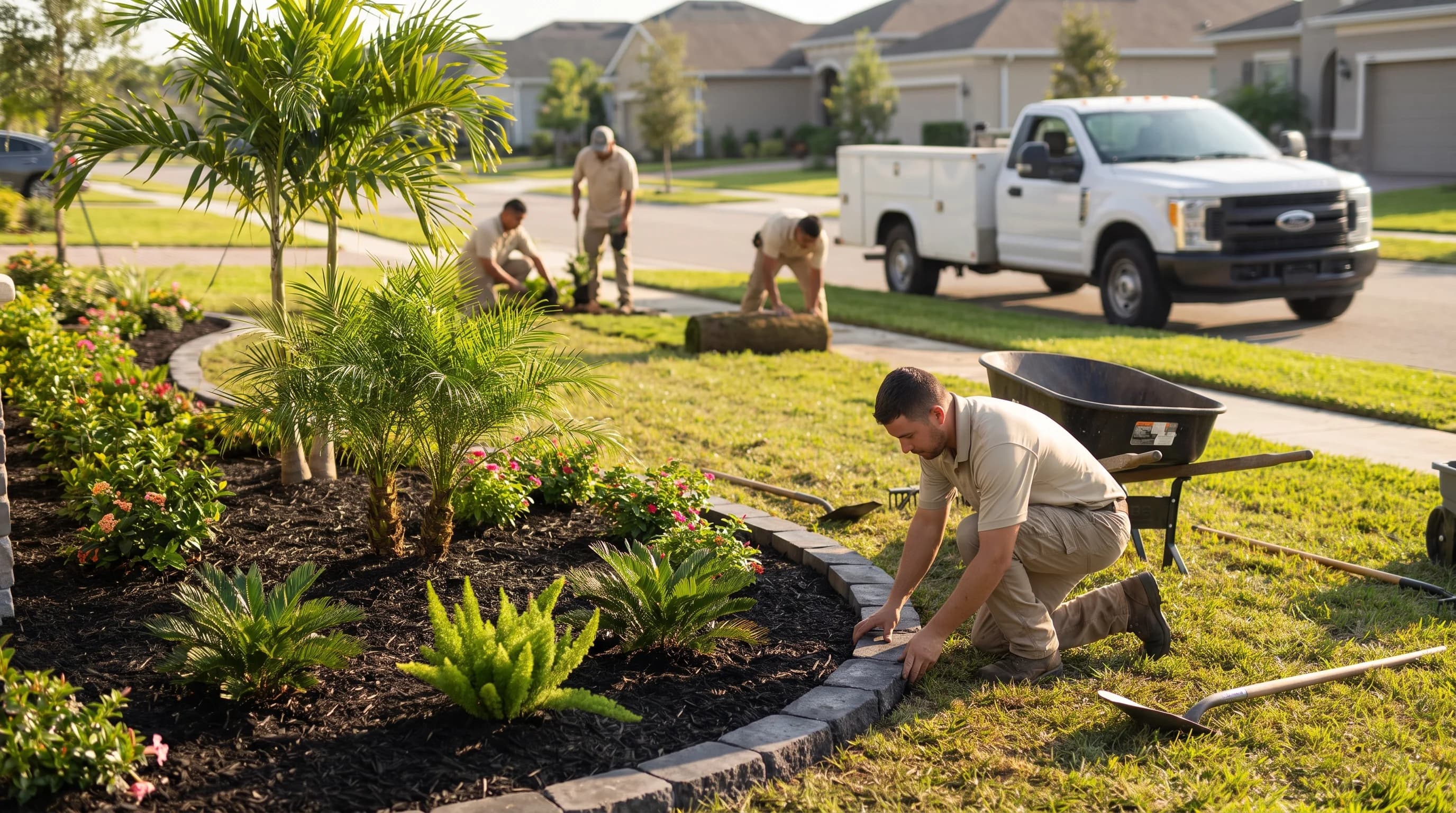
Your crew is halfway through an install on the other side of town. You are on your knees setting the last few pavers when the phone buzzes in your pocket. You cannot stop, so it goes to voicemail. That caller found you through the ad you are paying for. By the time you wipe your hands and call back forty minutes later, they have already booked the second company that picked up.
That is the real story of landscaping advertising, and almost no guide tells it. Search the topic and you get the same list every time: run Google ads, post before-and-after photos, wrap your truck, buy yard signs. All of it can work. But every one of those articles stops at the moment the phone rings, which is exactly where the money is won or lost.
This guide covers the channels worth your time in one honest pass, then spends the rest where the competition goes quiet: what has to happen after your advertising works so the calls you paid for actually become booked jobs.
What the standard advice gets right
Start with the channels, because they do matter. For a landscaping company competing for local work, a few of these running together will keep the phone ringing:
- Google Business Profile. When someone searches "landscaper near me," Google shows a local map pack of three nearby businesses above the regular results. Ranking there is the highest-value free thing most owners can do. Claim the profile, complete every field, pick the right primary category, and post real job photos every week. Google spells out the rules in its guidelines for representing your business on Google, and profiles that bend them risk getting suspended.
- Local Services Ads and Search Ads. When you need calls this week, paid ads put you in front of people searching right now. Local Services Ads sit at the very top with a Google Guaranteed badge and charge per lead instead of per click, which suits service-area work well.
- Social proof in pictures. Before-and-after photos of a tired yard turned into a clean design are the most persuasive thing you own. Post them where local homeowners scroll.
- Reviews. They help you rank in the map pack and they close buyers comparing you to two other quotes. Ask every happy customer right after the job and reply to all of them.
- Signs, wraps, and referrals. A yard sign in a neighborhood where you just finished an install, a wrapped truck parked at the job, a simple referral ask - cheap, local, and steady.
None of that is wrong. The problem is that it is the whole conversation, when it should be half of it.
The part every landscaping advertising guide skips
Here is the uncomfortable truth. For phone-first trades like landscaping, tree work, and hardscaping, the buyer in practice tends to call two or three companies and lean toward whoever answers first and sounds competent. Your advertising does not compete on how clever the ad is. It competes on what happens in the ninety seconds after the click.
The research backs this up. The Harvard Business Review's audit of online lead response, written up as The Short Life of Online Sales Leads, found that firms contacting a lead within an hour were far more likely to have a meaningful conversation than those who waited even a little longer, and that a large share of companies were painfully slow or never responded at all. The lesson for a landscaping owner is blunt: the leads you already generate are worth more when you answer fast, and most of your competitors are slow.
The catch is that you are a landscaper. You are on a mower, behind a skid steer, or forty feet up a palm. You physically cannot answer every call live. So the fix is not "answer faster" as a personality trait - it is a system that responds for you:
- Missed-call text-back. The instant a call goes unanswered, an automatic text goes out: "Sorry we missed you - this is [Company]. What are you looking to get done?" That one message keeps the lead warm long enough for you to get off the machine.
- A callback measured in minutes, not the end of the day. Whoever handles the phone calls back while the homeowner is still comparing options, not after they have signed with someone else.
- Two or three polite follow-ups on every open quote. Most jobs are not won on the first touch. A quote sent once and never chased is the biggest leak in the trade.
This is exactly why we do not sell one-off ad channels. Paying to make the phone ring and then losing the call to voicemail is the most expensive mistake in landscaping. Tree Revenue builds a complete growth system for landscaping companies that plugs those leaks - missed-call text-back, quote follow-up, and call tracking - so the advertising you already pay for turns into work on the calendar.
Which landscaping ads actually book jobs
Once the response leak is sealed, the next question is where to put your money. You cannot answer that by staring at clicks and impressions. Those tell you an ad got attention, not that it booked a job.
Two tools give you the truth:
- Call tracking. Put a different phone number on each channel - one on your Google Business Profile, one on your Search Ads, one on your yard signs. Now when a job books, you know which channel produced it instead of guessing.
- Cost per booked job. This is the only number that matters in the end. Total spend and cost per lead are noise. When your follow-up is tight, you waste fewer of the leads you pay for, and your cost per booked job drops even if your ad spend never changes.
You do not need fancy software to start. A one-line note on every booked job - where did this caller come from - run for a month will already show you which one or two channels carry the revenue and which just look busy. Then you move budget toward what pays and cut what does not.
Advertising through a Florida season
Most landscaping advertising advice is written for the snow belt: advertise in late winter, work spring through fall, hibernate in December. Central Florida does not run on that calendar. The growing season is year round, so demand is steadier and the smart move is to keep a base level of advertising on all the time rather than sprinting in one season.
Two local realities are worth planning around. Steady year-round growth means maintenance and enhancement work never fully stops, so your advertising should never fully stop either. And the Atlantic hurricane season, which the National Hurricane Center dates from June 1 to November 30, drives its own spikes in cleanup, debris, and restoration work - a stretch when a ready-to-answer landscaping company can pick up storm-related jobs that competitors are too slow to catch. Demand for outdoor services broadly is not going away either. The Bureau of Labor Statistics projects grounds maintenance employment to keep growing about as fast as average through 2034, which tells you the buyers are there year after year. The companies that win are simply the ones ready to answer when those buyers call.
Do this before Friday
Landscaping advertising is not complicated once you stop counting clicks and start counting booked jobs. Four moves you can make this week, in order:
- Turn on missed-call text-back today. It is the single highest-return change most landscapers can make, and it stops the leak that wastes every ad dollar you spend.
- Complete your Google Business Profile. Fill every field, set the right category, and post four recent job photos. It is free and it feeds the map pack.
- Put a tracked number on each channel. Even a simple version tells you which ads book real work within a month.
- Commit to two follow-ups on every open quote. Put it on a whiteboard if you have to. Most owners find money sitting in quotes they never chased.
Notice the order: the first item is not an ad channel at all, it is the habit that decides whether the ad channels pay. Get those four done and you will book more jobs from the exact same advertising budget you already spend. If you would rather hand the whole pipeline off than build it between estimates, our pricing page lays out the packages in plain numbers and the growth system walks through Foundation, Growth, and Scale. The best landscaping advertising in the world still loses to the company down the road that simply answered first.