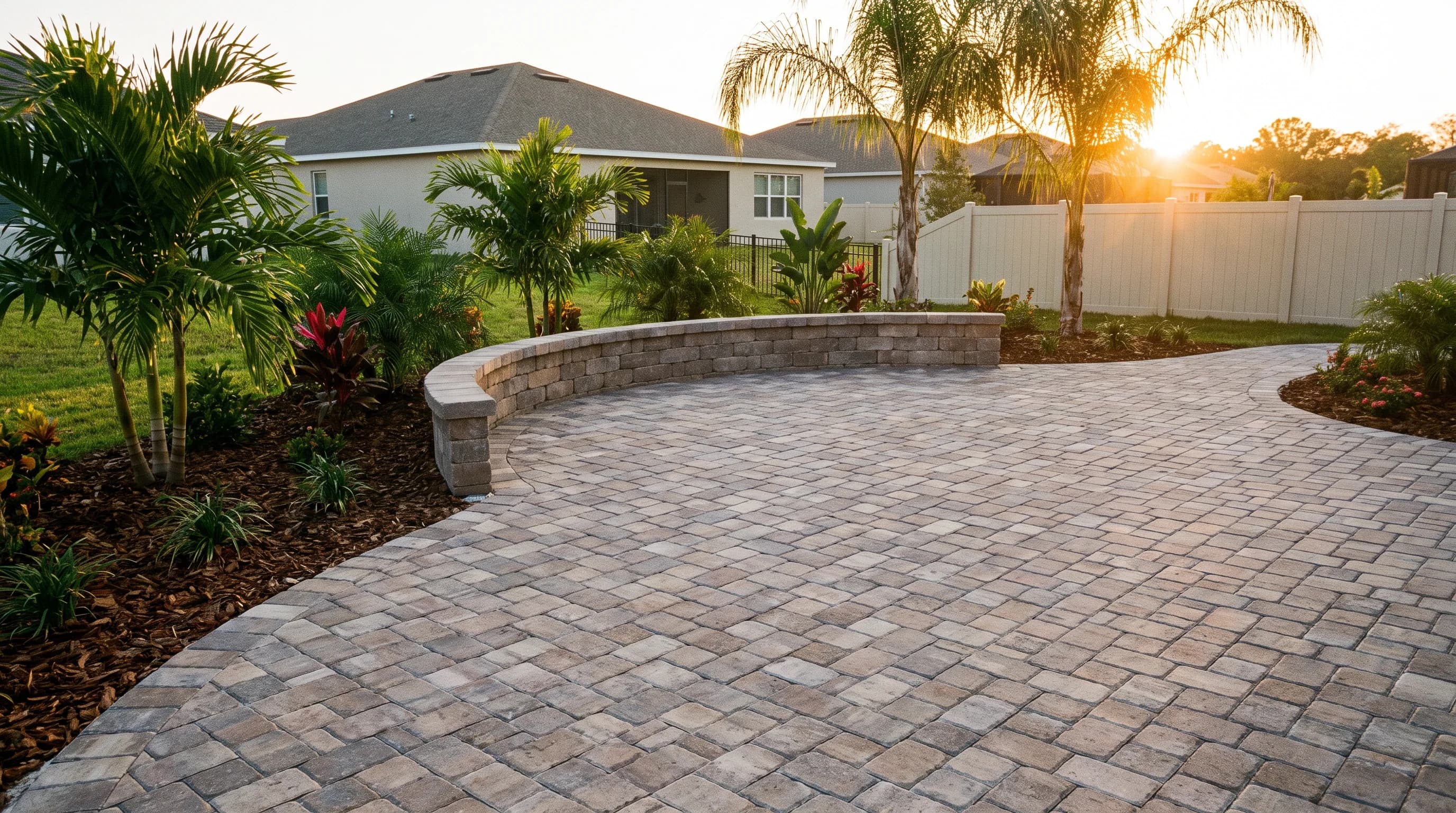
Run the math before you spend a dollar on marketing. A paver patio commonly lands between $8,000 and $20,000. A retaining wall or driveway can run higher. A full outdoor living build climbs well into five figures. So one booked job, a single signature, can pay for months of advertising with margin left over.
That one fact should change how you think about hardscape contractor marketing. Most guides treat it like a volume problem: get more clicks, more leads, more traffic. But for high-ticket outdoor work, volume is not the constraint. A handful of the right projects, sold well, is a full season. The constraint is whether the serious buyers who find you can picture the finished space, trust your crew to build it, and get past the sticker shock of a five-figure number.
This guide is about winning those projects. It is not another list of ad channels with the settings swapped. It is what actually moves a homeowner from browsing patio photos to signing your proposal.
Sell the finished space, not the service
Nobody wakes up wanting to buy pavers. They want the backyard they keep seeing on their phone: the evening on a clean patio, the fire feature, the outdoor kitchen. Hardscape is bought with the eyes, and that changes what your marketing has to do.
Your job is to help the buyer see their own yard finished. That means depth of proof, not a single hero photo. Show full project sets: the tired starting point, the build in progress, the finished reveal, and a few angles of the details that separate real craftsmanship from a weekend job.
- Before-and-after sets are the most persuasive asset you own. One dramatic transformation does more than a page of copy about "quality workmanship."
- Variety by project type matters because a buyer wants to see work like theirs. Group your galleries by paver patios, driveways, retaining walls, pool decks, and outdoor kitchens so a homeowner lands on the exact thing they are imagining.
- Local, recognizable settings build trust. Central Florida homes, screened lanais, and palm-lined yards tell a nearby buyer you build in their world, not a catalog.
Where paver buyers actually find you
Because the sale is visual, so is the discovery. Long before a homeowner calls, they are collecting images: saving patios on Pinterest, scrolling Instagram, and searching Google for "paver patio ideas" in image-heavy results. Your marketing needs to be present where that browsing happens.
Two channels do most of the work.
- Google Business Profile. When someone searches "paver contractor near me," Google shows a local map pack of nearby businesses with photos above the regular results. Ranking there is the highest-value free thing most owners can do, and the profile is a gallery in its own right. Post fresh project photos every week and keep the categories accurate. Google spells out the rules in its guidelines for representing your business on Google.
- Social image feeds. Pinterest and Instagram are where homeowners build the vision before they have a contractor. You do not need to be a content marketer. You need to post real finished projects consistently, tagged and captioned with the service and the area.
When you need work on the calendar sooner, paid ads put you in front of people searching right now. Local Services Ads sit at the top with a Google Guaranteed badge and charge per lead rather than per click where your category is eligible. Whatever ad you run, send the click to a page about that exact service, never your homepage. A "paver patio" ad should land on paver patio projects with pricing context and a tap-to-call button. Mismatched landing pages are one of the most common reasons hardscape ad budgets quietly underperform.
The five-figure decision has more friction
Here is what separates hardscaping from mowing or a quick repair. A patio or outdoor kitchen is a considered purchase. The homeowner is spending real money, they want it done right, and they almost always gather two or three quotes over days or weeks.
That means the decision does not happen on the first call, and the contractor who wins is rarely the cheapest. It is usually the one who reduced the friction on a big, scary number.
- Answer fast, or text back if you cannot. Your crew is on a job and the phone rings. A missed call that triggers an automatic text within seconds keeps you in the running instead of losing the buyer to the next name on their list.
- Make the proposal easy to say yes to. A clear quote with good options and, where it fits, a financing path takes the sting out of a five-figure number. Sticker shock, not lack of interest, is what stalls most hardscape jobs.
- Follow up two or three times on every open estimate. Not pushy. A short check-in, a note answering a likely question, an offer to walk the site again. This is where cold quotes come back to life.
This is exactly why we do not sell one-off ad channels. Paying to generate interest and then losing it in a slow, unfollowed proposal process is the most expensive mistake in hardscaping. Tree Revenue builds a complete growth system for hardscape contractors that plugs those leaks - missed-call text-back, quote follow-up sequences, and call tracking - so the buyers your marketing produces actually turn into signed projects.
Trust signals that close a big outdoor build
On a five-figure project, a homeowner is not just buying a design. They are betting that your crew will not leave them with a sinking patio in two years. Marketing that surfaces the right trust signals closes more of those bets in your favor.
- Reviews with photos. A buyer comparing three quotes reads reviews closely on a big job. Ask every happy customer right after the reveal, and steer them toward mentioning the specific project.
- Credentials that mean something. Manufacturer authorized-installer status and independent certification carry real weight. The Concrete Masonry and Hardscapes Association, successor to ICPI, runs installer certification programs for interlocking pavement and segmental retaining walls, and homeowners increasingly know to look for them. If you hold one, put it on your site and proposals.
- Warranty and process clarity. Spelling out your base prep, your warranty, and how you handle Florida drainage answers the fear behind the price. Confidence in the process is often what tips a hesitant buyer.
Know which marketing books projects
Once the vision, the proof, and the follow-up are in place, the question is where to put your money. You cannot answer that by staring at clicks and impressions. Those tell you an ad got attention, not that it booked a $12,000 patio.
Put a different tracked phone number on each channel, and judge every channel by one number: cost per booked job. Because a single hardscape project is worth so much, you can afford a healthy cost per booked job and still make strong margin, but only if you know the number. A one-line note on every signed project - where did this buyer come from - kept for a couple of months shows you which channel carries your revenue and which just looks busy.
Geography matters here more than in most trades, because your crews and equipment only travel so far. Google lets you set location targeting on your ads so you are not paying for clicks from homeowners well outside your service radius.
Marketing through a Central Florida season
Most hardscape advice assumes a snow-belt calendar: quote in winter, build spring through fall, go quiet in the cold. Central Florida does not run on that schedule. Outdoor living is a year-round pursuit here, so demand for patios, pool decks, and kitchens rarely fully stops, and your marketing should not either.
Storm season is the local wrinkle worth planning around. The National Hurricane Center dates the Atlantic hurricane season from June 1 to November 30, and heavy weather drives repair and rebuild work on damaged patios, walls, and drainage. A contractor who keeps a steady base of marketing running all year is positioned to catch that work while slower competitors are still spinning up.
If you only change one thing this quarter
Hardscape contractor marketing is not complicated once you stop counting clicks and start counting booked projects. Where you start depends on where your business actually leaks:
- If serious buyers are not finding you at all, the gap is visibility and proof. Build out the galleries, complete the Google Business Profile with fresh project photos, and start posting real work where homeowners collect ideas.
- If people inquire but the quotes go cold, the gap is at the close. Fix response speed, reduce sticker shock with clear options, and follow up on every open estimate. This is the highest-return change most hardscape contractors can make, and it costs almost nothing.
- If you would rather hand the whole pipeline off than build it between site visits, our pricing page lays out the packages in plain numbers and the growth system walks through Foundation, Growth, and Scale.
Whatever you choose, remember the math you started with. On high-ticket hardscape work, a single recovered proposal can be worth more than a whole month of ad spend. The contractor who wins is not the one with the flashiest ad. It is the one who helped the buyer see the finished yard and made the big number easy to say yes to.