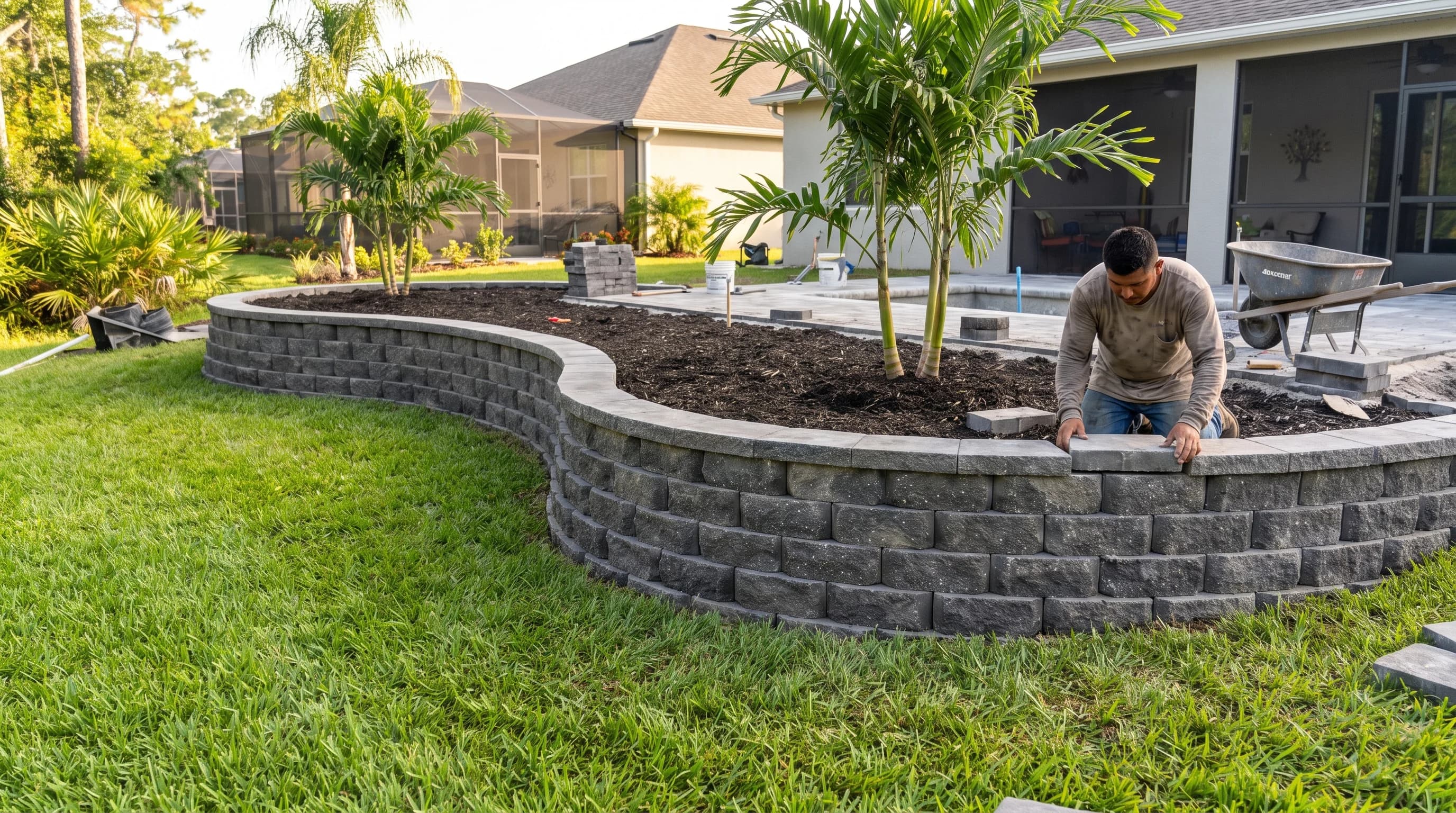
Say a retaining wall job on your calendar is worth $12,000. That is a normal ticket for hardscaping work, where projects commonly run $5,000 to $50,000 or more depending on size and site. Now say two extra qualified retaining wall leads land in your inbox this month and you close one. That single job is worth more than most contractors spend on marketing in a quarter.
That is the whole reason retaining wall leads are worth being deliberate about. The tickets are big enough that you do not need a flood of them. You need a steady handful of the right ones, and you need to stop losing the ones you already get.
Here is how to build that, in the order that actually pays off.
Start with the leads you are already losing
Before you buy a single click, look at what happens to the retaining wall leads you get today.
Most hardscaping owners are surprised by the leak. A homeowner planning a $15,000 wall does not leave one voicemail and wait. They call three contractors in an afternoon, and they hire the one who answers, sounds like they know walls, and shows up to measure. If your crew is on a job site and the phone rings out, that lead is gone before you ever knew it existed.
So audit your response first. For one week, track every retaining wall inquiry: how it came in, how fast you replied, and whether it turned into a scheduled estimate. If anything is sitting overnight in an inbox or dying in voicemail, that is your cheapest source of new jobs, and it costs nothing to fix.
The reason speed matters so much is buyer behavior. High-ticket home projects go to the contractor who feels responsive and competent early. You cannot control what the other two companies do, but you can control being first. Automated missed-call text-backs and fast quote replies exist for exactly this, and they are the backbone of a real growth system for hardscaping companies that catches leads instead of leaking them.
Make your Google Business Profile a wall portfolio
For local, near-me searches, your Google Business Profile is the front door. When someone searches "retaining wall contractor near me," the map pack of three businesses is what they see and call first.
Retaining walls are a visual sale, which works in your favor here. Load your profile with real photos of finished walls: segmental block, natural stone, poured concrete, tiered garden walls, drainage done right. Before-and-after shots of a failing slope turned into clean terraces do more selling than any tagline.
Keep the basics honest and complete, because Google has clear rules about how you represent your business. Its guidelines for representing your business on Google spell out what your name, categories, and service areas should look like. Set your primary category accurately, list retaining walls and hardscaping among your services, and define the towns you actually serve.
Then feed it reviews. After every finished wall, ask the customer to leave a review that mentions the work and the town. A steady drip of recent, specific reviews is one of the strongest signals for showing up in the local map, and it is proof the next buyer reads before they call.
Give retaining walls their own page
Do not bury retaining walls inside a generic "services" page. Give the work its own dedicated page on your website, with a gallery, a plain explanation of your process, and a click-to-call button that is easy to hit on a phone.
Why a separate page matters:
- It ranks for the search. A page built around retaining walls, with real content about block systems, drainage, and permits in your area, can rank for "retaining wall" searches in your towns on its own.
- It converts the click. Someone who lands on a focused wall page with photos and a clear next step is far likelier to call than someone dropped on a busy homepage.
- It qualifies the buyer. A short explainer of how you build walls, what you charge for, and what a typical project looks like filters out tire-kickers before they eat your time.
You do not need to publish prices, but framing the investment helps. You can note that retaining wall costs vary widely by material and site, running from roughly $20 to $70 per square foot of wall face as an illustrative range, and that a proper wall includes engineering, drainage, and a base most cheap bids skip. That honesty builds trust and pre-sells the buyer on why your quote is not the lowest.
Turn on paid leads to fill the schedule now
The profile and website compound over months. Ads buy you visibility today. For a high-ticket job, that trade is usually worth it.
Two paid channels fit retaining wall work:
- Local Services Ads. These sit at the very top of many searches and charge you per lead rather than per click. Google's overview of how Local Services Ads work explains the verified badge and lead-based pricing. Availability of specific categories varies by market, so check what your area supports.
- Search ads. Standard Google Ads let you show up for terms like "retaining wall builder [city]" with call-focused ads. Point them at your dedicated wall page, not your homepage, and use negative keywords to filter out DIY and materials-only searches.
The one rule with paid retaining wall leads: judge them on booked jobs, not clicks. A lead that costs more but closes at a high rate beats a cheap lead you can never reach. Watch shared-lead vendor platforms carefully, because a lead resold to four contractors is a race you are paying to enter.
Build trust that closes the high ticket
A retaining wall is a structural, permanent thing on someone's property. Buyers are nervous about it failing, bulging, or draining into their foundation. Whoever answers that fear best wins the job.
Certification is one honest way to do it. Programs like the Concrete Masonry and Hardscapes Association's segmental retaining wall installer certificate give you real credentials to put on your site and quotes. It signals you build to a standard, not by guesswork, and that is exactly what a homeowner spending five figures wants to hear.
Pair credentials with proof: photo galleries, honest reviews, a clear warranty, and a quote that explains the base and drainage most cut-rate bids leave out. Trust is what lets you win the job without being the cheapest, which is the only sustainable way to sell high-ticket hardscaping. If you want the answering, follow-up, and review systems that hold this together handled for you, that is what our done-for-you growth packages are built to do.
Your retaining wall lead plan for this week
You do not need to overhaul everything. Do these four things before Friday:
- Track every inbound lead for one week. Note the source and your response time. Find the leak before you pay to add volume.
- Post ten finished-wall photos to your Google Business Profile, and ask your last three customers for a review.
- Draft or fix a dedicated retaining wall page with a gallery and a click-to-call button, then point any ads at it.
- Pick one paid channel to test, Local Services Ads or a small search campaign, with a budget you can watch daily.
Retaining wall leads are not about volume. They are about catching the few high-ticket buyers who are ready, and being the contractor who answers first and looks the most trustworthy. Get that right and a couple of extra walls a month quietly reshapes your year. When you are ready to see how the pieces fit together with plain pricing, the transparent growth packages page lays it out.