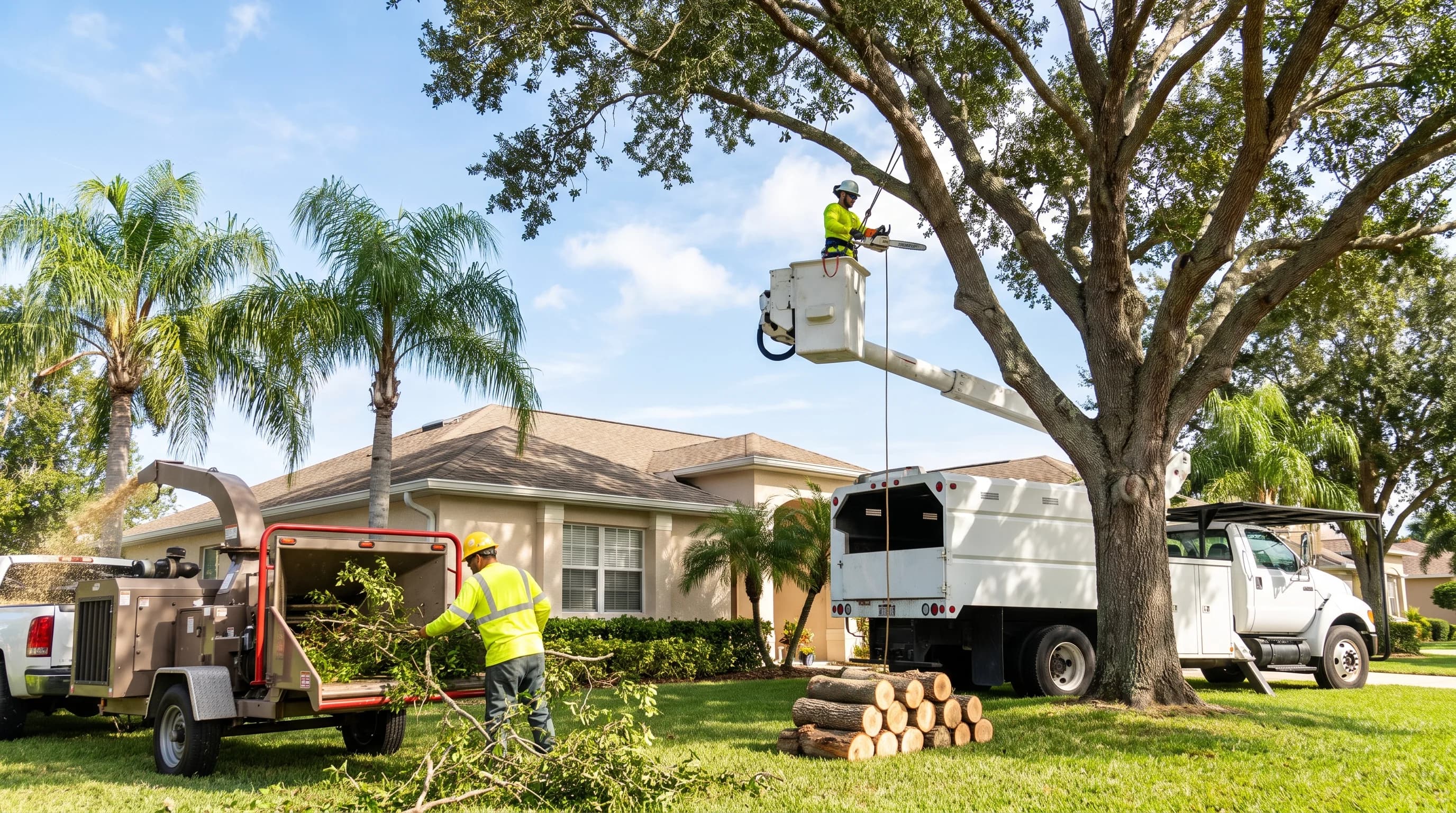
You already know how to get tree service leads the hard way: knock out a clean removal, hand over a card, and hope the neighbor calls. That works. It is also slow, unpredictable, and it stops the week the phone goes quiet.
The owners who stay busy year-round are not lucky. They run a handful of lead channels on purpose, and - this is the part almost nobody talks about - they answer fast and follow up on every quote. A lead you never call back is not a lead. It is money you paid for and threw in the chipper.
This guide covers the channels worth your time, roughly what they cost, and the follow-up system that decides whether any of it turns into revenue.
The two mistakes that keep tree companies feast-or-famine
Before the channel list, name the trap. Most tree service owners get stuck in one of two ways.
Mistake one: one channel. Referrals only. Or a single yard sign. When that one source dries up - the busy neighbor moves, the season shifts - the pipeline goes to zero and you are bidding low just to keep the crew paid.
Mistake two: a leaky bucket. You spend on ads or lead services, the phone rings, and then a missed call, a slow callback, or a quote you never chased lets the job walk to whoever answered first. Homeowners with a leaning oak do not wait. Studies of home-service buyers consistently show the first company to respond wins the majority of the work.
Getting more leads while the bucket leaks just means you pay more per booked job. Fix the bucket first, then open the taps.
The tree service lead channels that actually work
Here is the honest map. Not every channel fits every business, but a healthy tree company usually runs three or four of these at once so no single dip sinks the month.
1. Google Business Profile (your best free lead source)
When someone searches "tree removal near me," Google shows the map pack - the three local businesses with a map - above everything else. Ranking there is the single highest-value free thing you can do.
To compete in the map pack:
- Claim and fully complete your Google Business Profile. Correct name, address, phone, service area, and hours.
- Pick the right primary category (Tree Service) and add relevant secondary categories (Arborist, Stump Grinding).
- Post real job photos every week. Before-and-after removals, the bucket truck on site, stump grinding.
- Ask every happy customer for a review and reply to all of them.
Reviews are the fuel here. They lift your map ranking and they close the homeowner who is comparing three profiles. This is slow to build and nearly impossible for a competitor to buy their way past, which is exactly why it is worth it.
2. Google Local Services Ads (pay per lead, Google Guaranteed)
Local Services Ads sit at the very top of the results, above regular ads and the map. You get the green "Google Guaranteed" badge, and you pay per lead rather than per click. For tree service, leads commonly run in the $15 to $50 range depending on your market and the job type.
Two things make LSAs strong for tree work:
- The badge is a real trust signal. Homeowners letting a stranger drop a limb near their roof want to see you are screened and insured.
- You can dispute leads that are clearly junk (wrong service area, spam) and get credited.
The catch: you must pass Google's background and insurance verification, and you have to answer the phone. LSAs rank partly on responsiveness, so missed calls quietly cost you ranking and money.
3. Google Search Ads for the jobs you want
Regular Google Ads let you buy your way to the top for specific searches - "emergency tree removal," "storm damage cleanup," "stump grinding [your town]." You control the budget and which jobs you chase.
The difference between owners who profit on Google Ads and owners who burn cash is not the ad. It is the setup: tight service-area targeting, call-only ad formats so a phone call is one tap, and a solid list of negative keywords (block "tree service jobs," "free wood," "DIY") so you stop paying for clicks that never book.
4. Referral and partner relationships
Your highest-close, lowest-cost leads come from people who already trust you: past customers, landscapers, property managers, real estate agents, and even other tree companies that do not do removals. These folks run into tree needs constantly.
Make it systematic, not accidental. A quick text to a past customer after a storm, a standing arrangement with two local landscapers, a small thank-you for referrals. Relationships are slow to build and durable once they are - the opposite of ads.
5. Buying leads from a lead service (use with eyes open)
Third-party lead services will sell you contacts, usually shared with several other companies. They can fill gaps when you are starting out, but you are renting demand, not owning it. The lead is shared, the margin is thin, and the day you stop paying it stops.
Treat bought leads as a short-term supplement while you build the assets you own - your profile, your reviews, your site, your referral network. Owning your pipeline beats renting it every time.
Storm season is a lead surge - be ready before it hits
It is hurricane season in Central Florida right now, and storms rewrite the math. A single system can create weeks of urgent, high-ticket tree work in a matter of days - removals, roof clearances, emergency cleanups where the homeowner is not price shopping, they just need it gone.
The companies that cash in are not the ones who scramble to set up ads after the wind stops. They are already ranking for emergency terms, already running LSAs, and - most importantly - they answer every single call during the surge. Get your storm-response terms and pages ready now, before the forecast turns.
The part nobody sells you: the follow-up system
Here is the uncomfortable truth about how to get tree service leads that pay. The channels above get the phone to ring. What happens in the next five minutes decides whether you booked a job or funded a competitor's.
Homeowners with a hazard call multiple companies. The first to answer, or the first to call back, usually wins - not the cheapest, the fastest. So the system matters as much as the marketing:
- Answer the call, every time. If you are up in a tree, you cannot. So you need missed-call text-back: the second you miss a call, an automatic text goes out - "Thanks for calling [Company], we are on a job site, what do you need and where?" - so the lead does not immediately dial the next name on the list.
- Respond fast. Aim to call qualified leads back within minutes, not hours. The gap between a 5-minute and a 30-minute callback is the difference between booking and voicemail tag.
- Follow up on every quote. Most jobs are not won on the first touch. A quote sent and never chased is the single biggest leak in this business. Two or three polite follow-ups over a week routinely recover jobs owners had written off.
- Track where leads come from. Call tracking tells you which channel actually books work, so you spend more on what pays and cut what does not - instead of guessing.
This follow-up layer is exactly why we do not sell one-off marketing channels. Generating leads and then losing them to a slow callback is the most expensive mistake in the trade. Tree Revenue builds a complete growth system for tree service companies that plugs the leaks - missed-call text-back, quote follow-up, and call tracking - so the leads you already pay for actually turn into booked jobs.
Putting it together: a simple 90-day plan
You do not need all of this at once. Sequence it.
Weeks 1 to 4 - fix the bucket. Get missed-call text-back live. Commit to calling every lead back within minutes. Start following up on every open quote twice. This costs almost nothing and lifts your close rate immediately.
Weeks 4 to 8 - own your free asset. Fully build out your Google Business Profile, post job photos weekly, and start asking every customer for a review. This is your compounding, competitor-proof channel.
Weeks 8 to 12 - add paid on purpose. Turn on Local Services Ads and a tight Google Search campaign for the jobs you actually want, pointed at pages that match the search. Now that the bucket is sealed, every dollar of ad spend works harder.
If you want a partner to build and run this instead of piecing it together between estimates, our transparent packages are laid out on the pricing page, and our growth system covers the whole path from traffic to booked job.
Frequently asked questions
How much do tree service leads cost?
It depends on the channel. Google Local Services Ads commonly run $15 to $50 per lead in tree service. Google Search Ads vary widely by market and competition. Google Business Profile and referrals cost time rather than dollars. The more useful number is your cost per booked job - which drops fast when your follow-up is tight, because you waste fewer of the leads you pay for.
What is the fastest way to get tree service leads?
Paid channels are fastest to switch on. Local Services Ads and Google Search Ads can put you in front of homeowners searching right now, often within days of setup. Free channels like your Google Business Profile and reviews take longer to build but cost far less over time. Most healthy tree companies run both.
Are bought tree service leads worth it?
They can bridge a gap when you are starting out, but the leads are usually shared with several competitors and you stop getting them the day you stop paying. Use them as a short-term supplement while you build assets you own - your profile, reviews, site, and referral network - which produce cheaper, higher-quality leads over time.
Why am I getting leads but not booking jobs?
Almost always a speed or follow-up problem, not a lead-quality problem. If calls go to voicemail, callbacks take hours, or quotes are never chased, homeowners book whoever answered first. Add missed-call text-back, call leads back within minutes, and follow up on every quote two or three times before you spend another dollar on more leads.
Do I really need more than one lead channel?
Yes. Relying on a single source - referrals only, or one ad campaign - is how tree companies end up feast-or-famine. When that source dips, the pipeline hits zero. Running three or four channels at once keeps the work steady through seasonal swings and slow weeks.
Getting the phone to ring is only half the job. The tree companies that grow are the ones who answer fast, follow up on every quote, and know which channel actually pays. Seal the leaks first, then turn up the volume - that is how to get tree service leads that become revenue you can see.